
CFA考試
報(bào)考指南考試報(bào)名準(zhǔn)考證打印成績(jī)查詢備考資料考試題庫(kù)

重置密碼成功

請(qǐng)謹(jǐn)慎保管和記憶你的密碼,以免泄露和丟失

注冊(cè)成功

請(qǐng)謹(jǐn)慎保管和記憶你的密碼,以免泄露和丟失

Ricardian and Heckscher–Ohlin Models of Comparative Advantage
幫考網(wǎng)校2020-08-06 17:11:45
|
The Ricardian model and the Heckscher–Ohlin model are two economic theories that explain the concept of comparative advantage. Both models are used to determine the factors that drive international trade and to understand the gains from trade.

Ricardian Model:

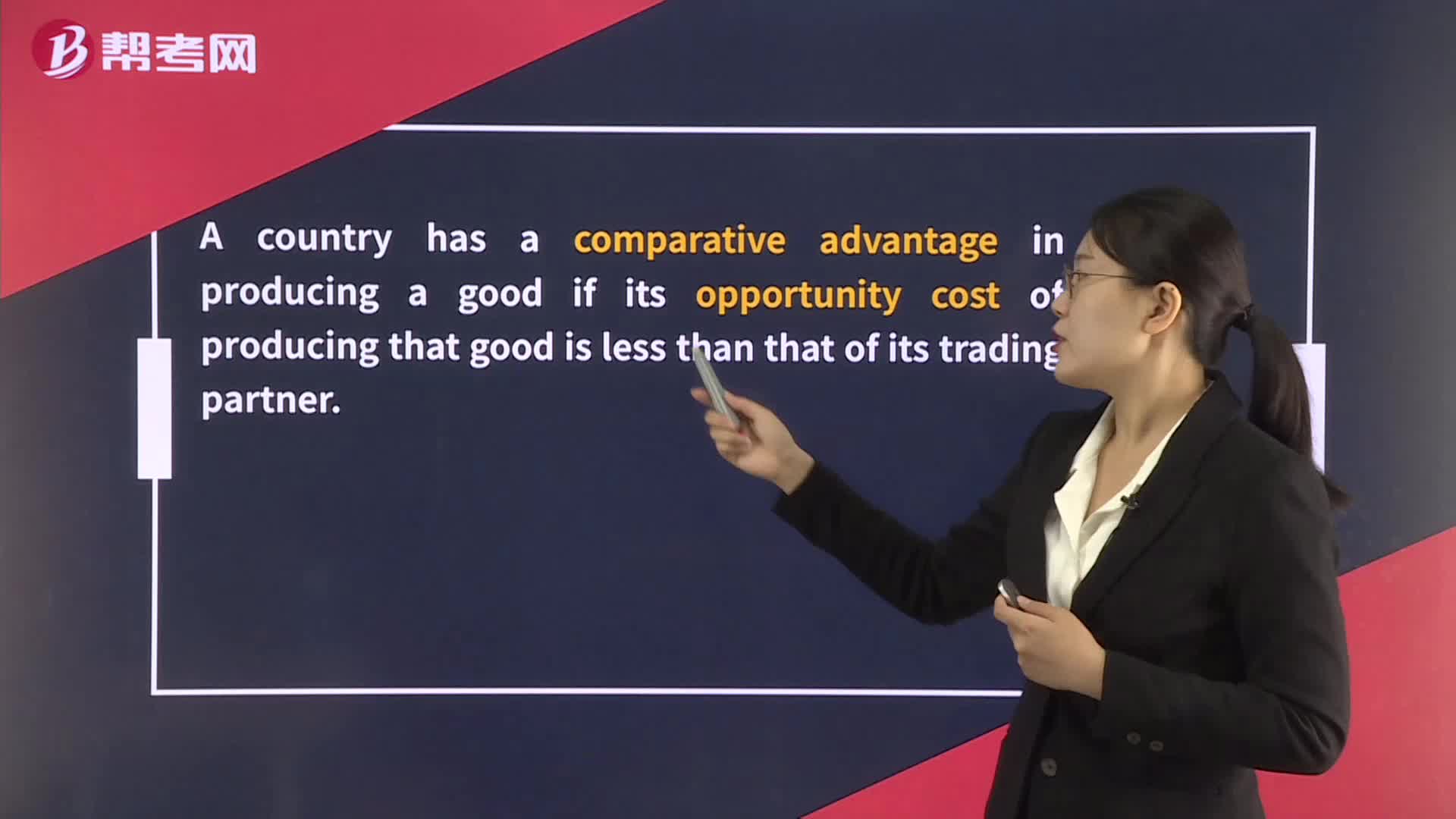
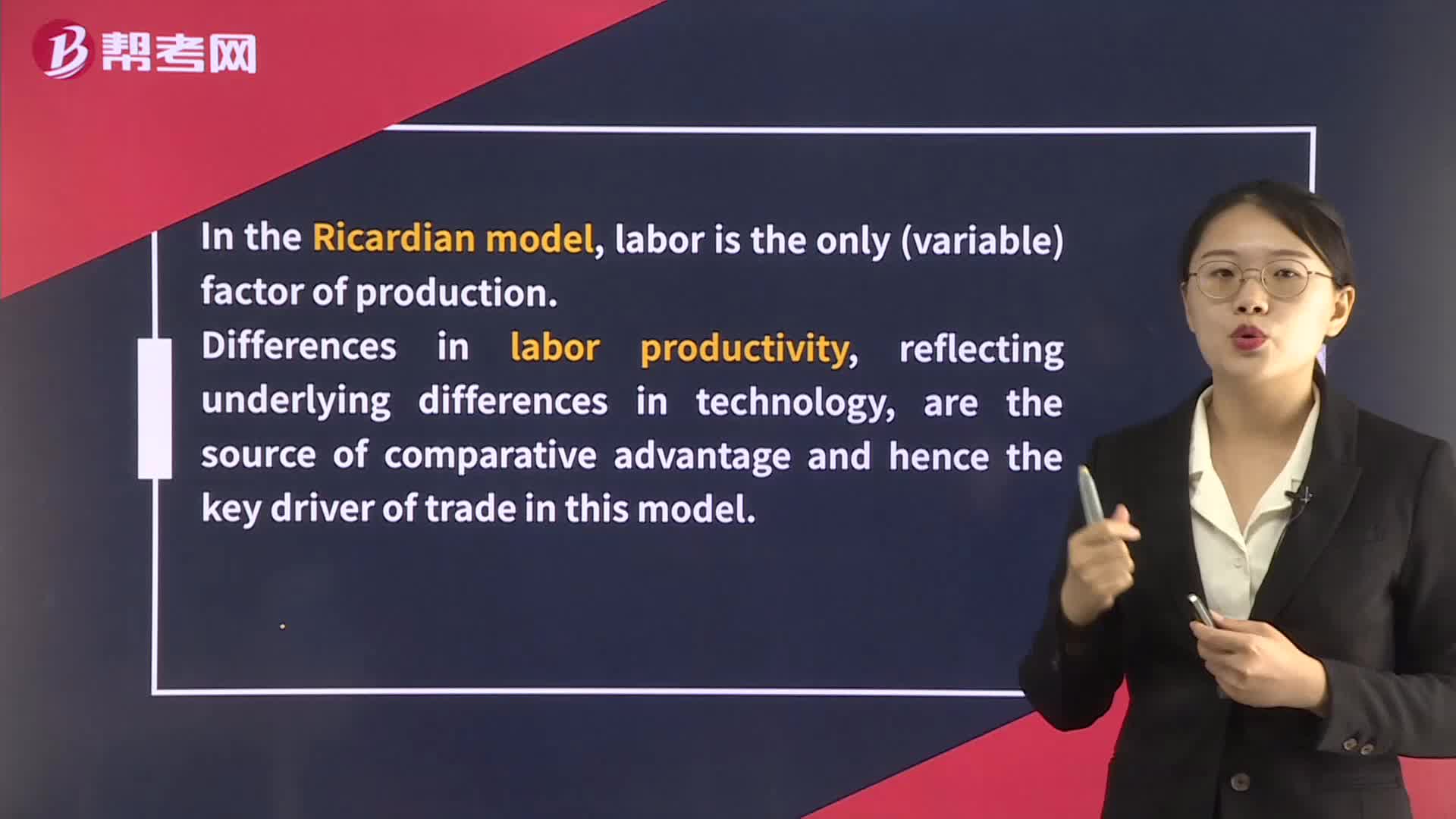
The Ricardian model, developed by David Ricardo, is based on the idea that countries should specialize in producing goods in which they have a comparative advantage. According to this model, a country has a comparative advantage in producing a good if it can produce that good at a lower opportunity cost than other countries.

Opportunity cost is the cost of giving up one good to produce another. For example, if a country can produce 10 units of wheat or 5 units of cloth with the same amount of resources, the opportunity cost of producing 1 unit of wheat is 0.5 units of cloth. If another country can produce 10 units of wheat or 3 units of cloth with the same amount of resources, the opportunity cost of producing 1 unit of wheat is 0.3 units of cloth. In this case, the second country has a comparative advantage in producing wheat, while the first country has a comparative advantage in producing cloth.

The Ricardian model assumes that there are only two countries and two goods, and that there are no transportation costs or barriers to trade. Under these assumptions, both countries can benefit from trade by specializing in producing the good in which they have a comparative advantage and trading with each other.

Heckscher–Ohlin Model:

The Heckscher–Ohlin model, developed by Eli Heckscher and Bertil Ohlin, is based on the idea that a country's comparative advantage is determined by its factor endowments, such as labor, capital, and natural resources. According to this model, a country will tend to export goods that use its abundant factors of production and import goods that use its scarce factors of production.

For example, a country with abundant labor and scarce capital will tend to export labor-intensive goods and import capital-intensive goods. This is because the abundant factor of production, labor, is relatively cheap in this country, while the scarce factor of production, capital, is relatively expensive. As a result, it is more efficient for this country to specialize in producing labor-intensive goods and trade with other countries for capital-intensive goods.

The Heckscher–Ohlin model assumes that there are two countries and two goods, and that factors of production are not mobile between countries. Under these assumptions, both countries can benefit from trade by specializing in producing the good that uses their abundant factor of production and trading with each other.
幫考網(wǎng)校
|

推薦視頻

推薦文章

  • 暫無(wú)文章
营口市| 桦南县| 方城县| 策勒县| 龙南县| 武夷山市| 石林| 福贡县| 崇州市| 丽水市| 合山市| 个旧市| 荃湾区| 阿坝| 虞城县| 六枝特区| 永定县| 建德市| 阳朔县| 淳化县| 石首市| 乐至县| 新野县| 灵寿县| 平舆县| 平定县| 丁青县| 农安县| 清苑县| 桐庐县| 河津市| 朝阳市| 肇州县| 新安县| 绥芬河市| 枣强县| 象州县| 象山县| 东源县| 邵阳县| 板桥市|