下載億題庫APP
聯(lián)系電話:400-660-1360
下載億題庫APP
聯(lián)系電話:400-660-1360

請謹慎保管和記憶你的密碼,以免泄露和丟失
請謹慎保管和記憶你的密碼,以免泄露和丟失
Theories of the Business Cycle - Neoclassical and Austrian Schools
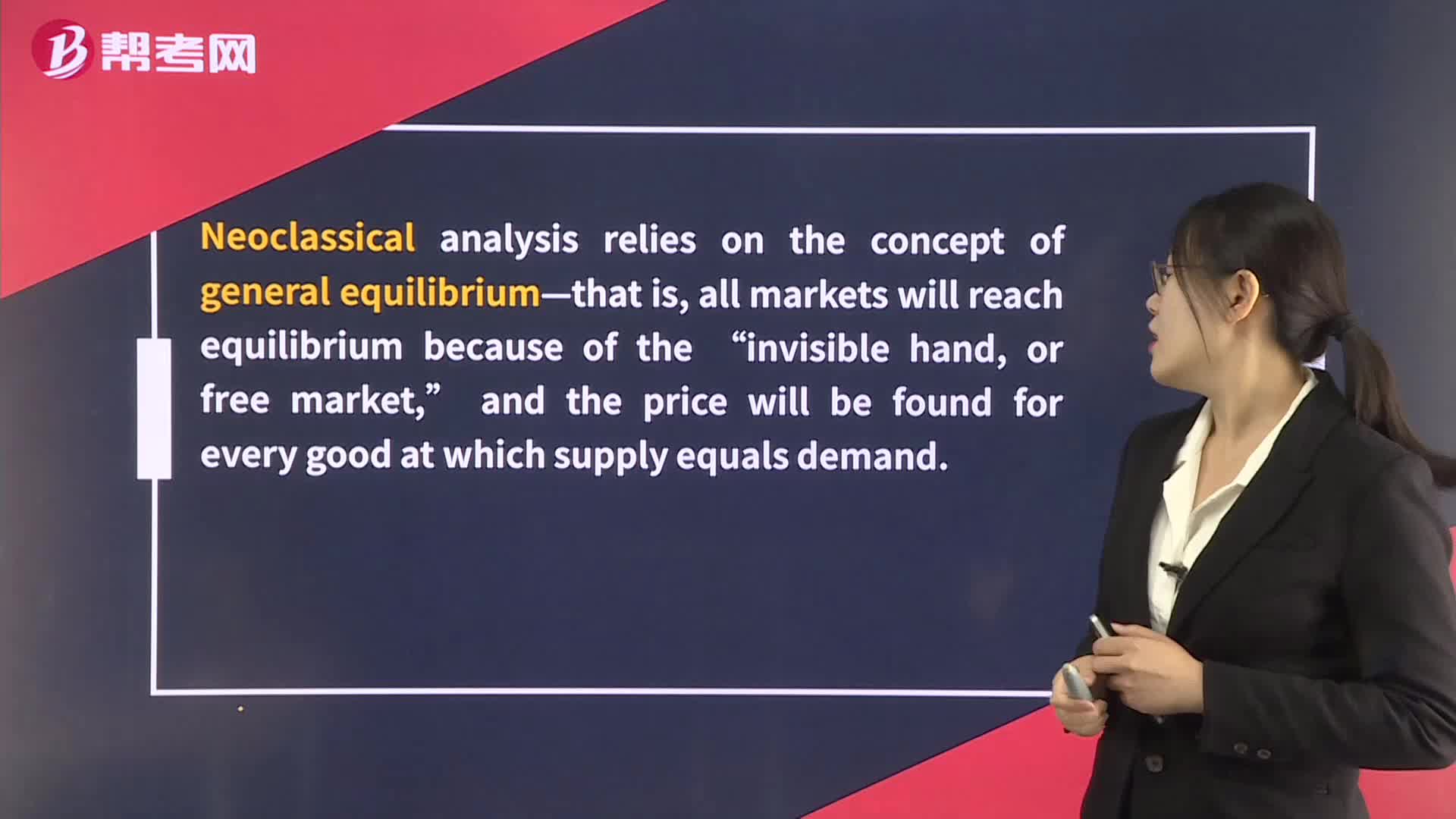
Neoclassical analysis relies on the concept of general equilibrium—that is, all markets will reach equilibrium because of the “invisible hand, or free market,” and the price will be found for every good at which supply equals demand.
All resources are used efficiently based on the principle of MC = MR, and no involuntary unemployment of labor or capital takes place.

Say’s law: All that is produced will be sold because supply creates its own demand.
Neoclassical economics recognizes that business cycles exist but treats them as temporary disequilibria.
In the neoclassical school, a massive crisis is impossible.
The Austrian school shared some views of the neoclassical school, but focused more on two topics: the roles of money and government.
The Austrian school has a theory of what causes the business cycle: It is misguided government intervention.
Austrian economists advocate limited government intervention in the economy. The best thing to do in the recession phase is to allow the necessary market adjustment to take place as quickly as possible.
 184
184Theories of the Business Cycle - Neoclassical and Austrian Schools:hand,every good at which supply equals demand.:schoolto do in the recession phase is to allow the necessary market adjustment to take place as quickly as possible.
 158
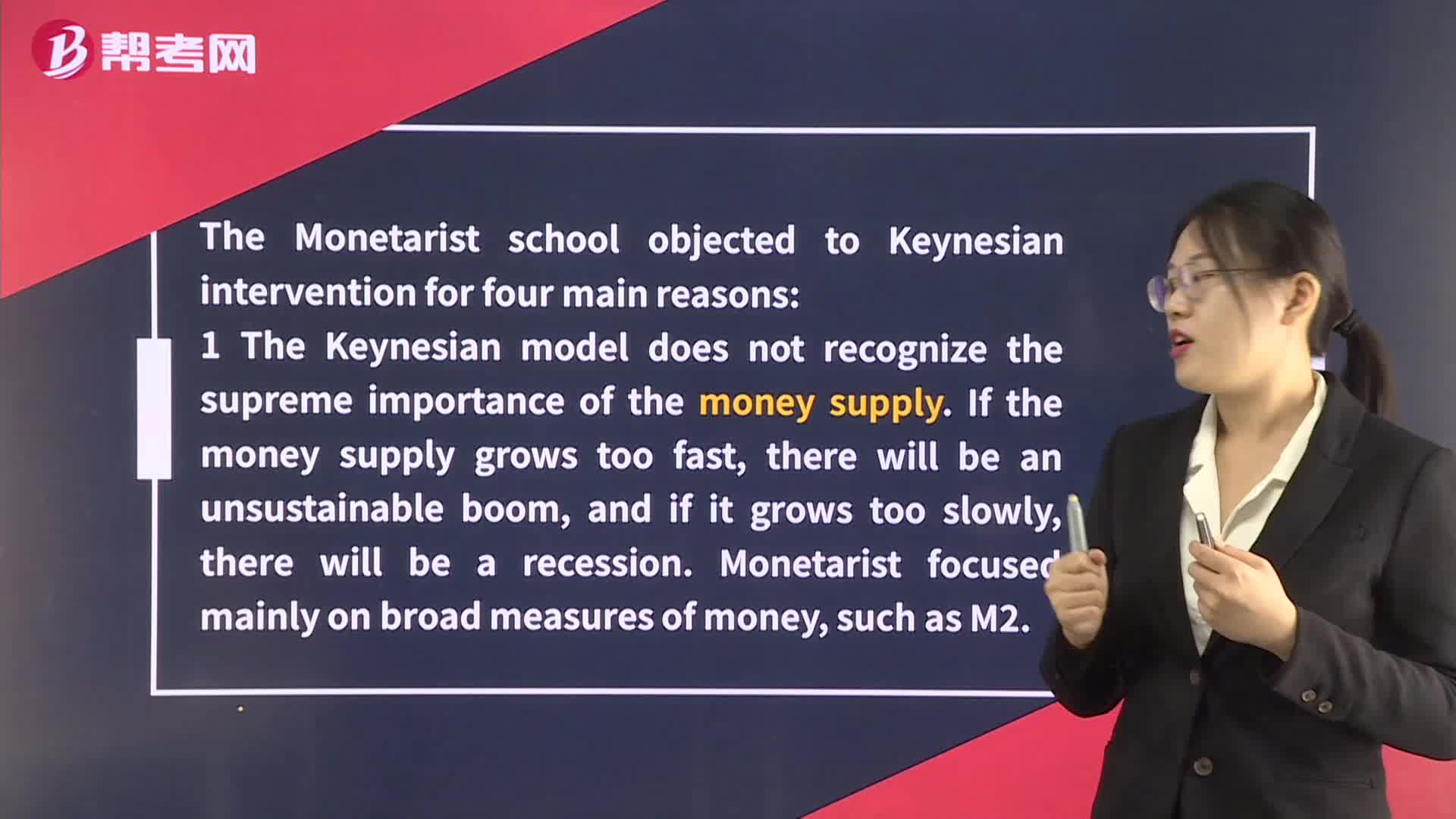
158Theories of the Business Cycle - Monetarist School:Theories of:boom,consider the long-term costs of government intervention e.g.continue to grow at a moderate rate.
 134
134Theories of the Business Cycle - Keynesian School:would be hard to attain.:the economy is already recovering.

微信掃碼關注公眾號
獲取更多考試熱門資料