
下載億題庫(kù)APP
聯(lián)系電話:400-660-1360
下載億題庫(kù)APP
聯(lián)系電話:400-660-1360

請(qǐng)謹(jǐn)慎保管和記憶你的密碼,以免泄露和丟失
請(qǐng)謹(jǐn)慎保管和記憶你的密碼,以免泄露和丟失
Point and Interval Estimates of the Population Mean
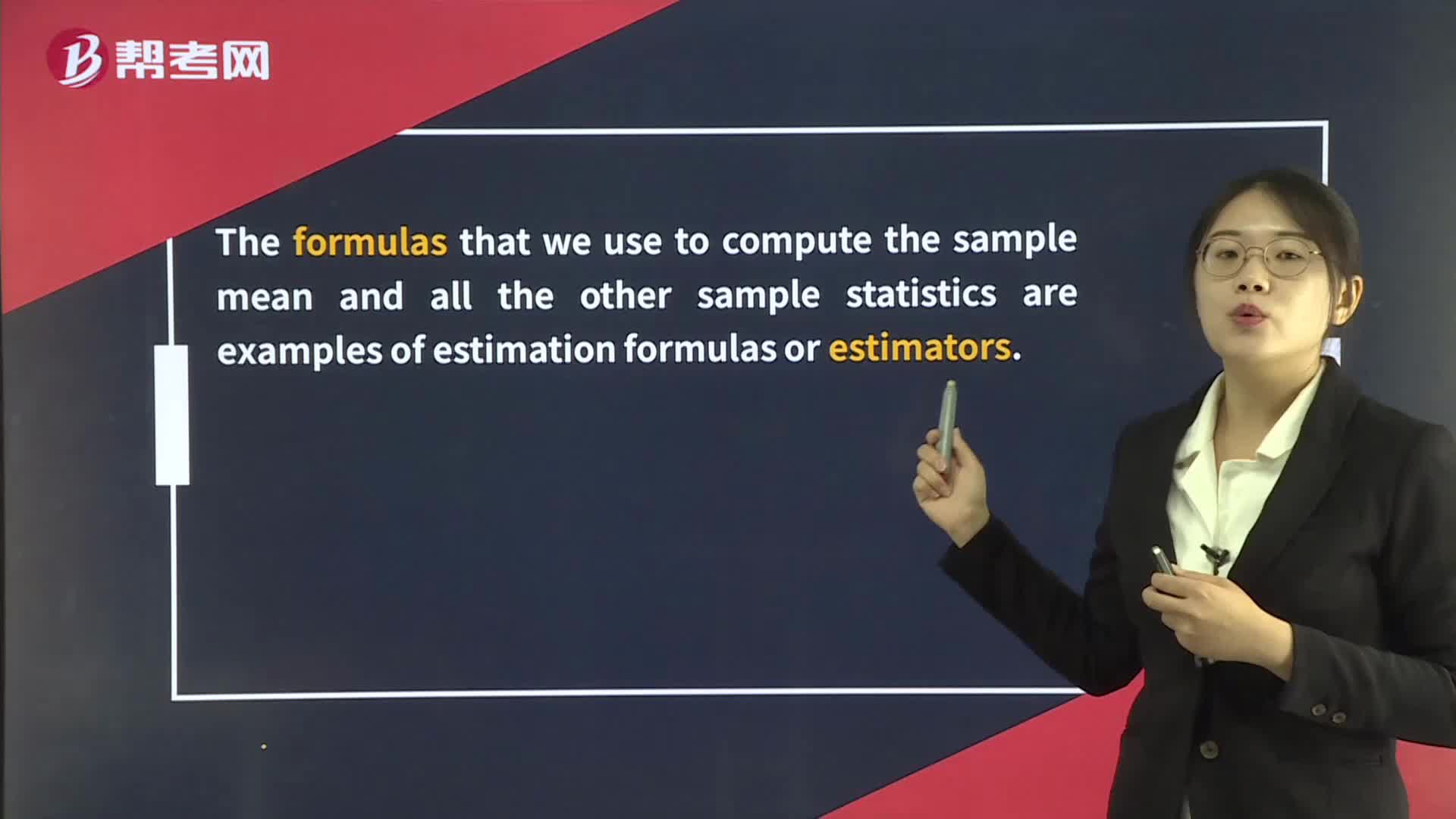
The formulas that we use to compute the sample mean and all the other sample statistics are examples of estimation formulas or estimators.
The particular value that we calculate from sample observations using an estimator is called an estimate.
An estimator has a sampling distribution; an estimate is a fixed number pertaining to a given sample and thus has no sampling distribution.
The calculated value of the sample mean in a given sample, used as an estimate of the population mean, is called a point estimate of the population mean.
Three desirable properties of estimators:
Unbiasedness.
An unbiased estimator is one whose expected value equals the parameter it is intended to estimate.
Efficiency.
An unbiased estimator is efficient if no other unbiased estimator of the same parameter has a sampling distribution with smaller variance.
微信截圖_159670100241620200806160335176.png)
[Practice Problems] If an estimator is consistent, an increase in sample size will increase the:
A. accuracy of estimates.
B. efficiency of the estimator.
C. unbiasedness of the estimator.
[Solutions] A
A consistent estimator is one for which the probability of estimates close to the value of the population parameter increases as sample size increases. More specifically, a consistent estimator’s sampling distribution becomes concentrated on the value of the parameter it is intended to estimate as the sample size approaches infinity.
Because of sampling error, the point estimate is not likely to equal the population parameter in any given sample.
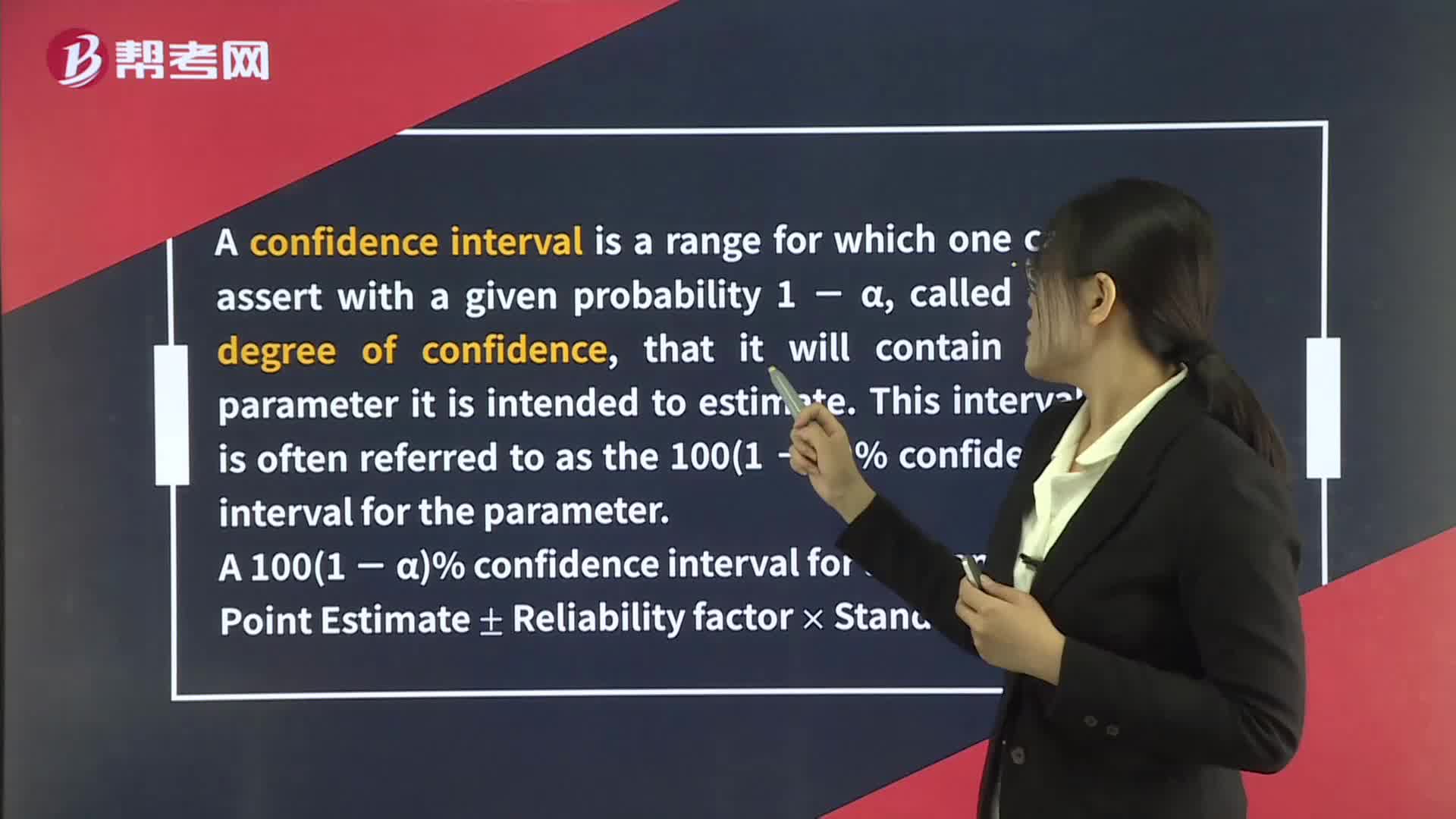
A confidence interval is a range for which one can assert with a given probability 1 ? α, called the degree of confidence, that it will contain the parameter it is intended to estimate. This interval is often referred to as the 100(1 ? α)% confidence interval for the parameter.
A 100(1 ? α)% confidence interval for a parameter:Point Estimate ±  Reliability factor×Standard error
微信截圖_1596701104501320200806160737196.png)
90 percent confidence intervals: Use z0.05 = 1.65
95 percent confidence intervals: Use z0.025 = 1.96
99 percent confidence intervals: Use z0.005 = 2.58
微信截圖_1596701332625220200806160903448.png)
The t-distribution is a symmetrical probability distribution defined by a single parameter degrees of freedom (df).
Symmetrically distributed around its mean value of zero.
df = n ? 1
Fatter tails.
As the df increase, approach the standard normal.
微信截圖_1596701432612520200806161044160.png)
微信截圖_1596701634758520200806161407129.png)
微信截圖_1596701695449020200806161509062.png)
微信截圖_1596701752179120200806161600251.png)
[Practice Problems] For a sample size of 65 with a mean of 31 taken from a normally distributed population with a variance of 529, a 99% confidence interval for the population mean will have a lower limit closest to:
A. 23.64.
B. 25.41.
C. 30.09.
微信截圖_1596702087485620200806162132637.png)
微信截圖_1596702147847320200806162234711.png)
微信截圖_1596702218354420200806162344336.png)
 191
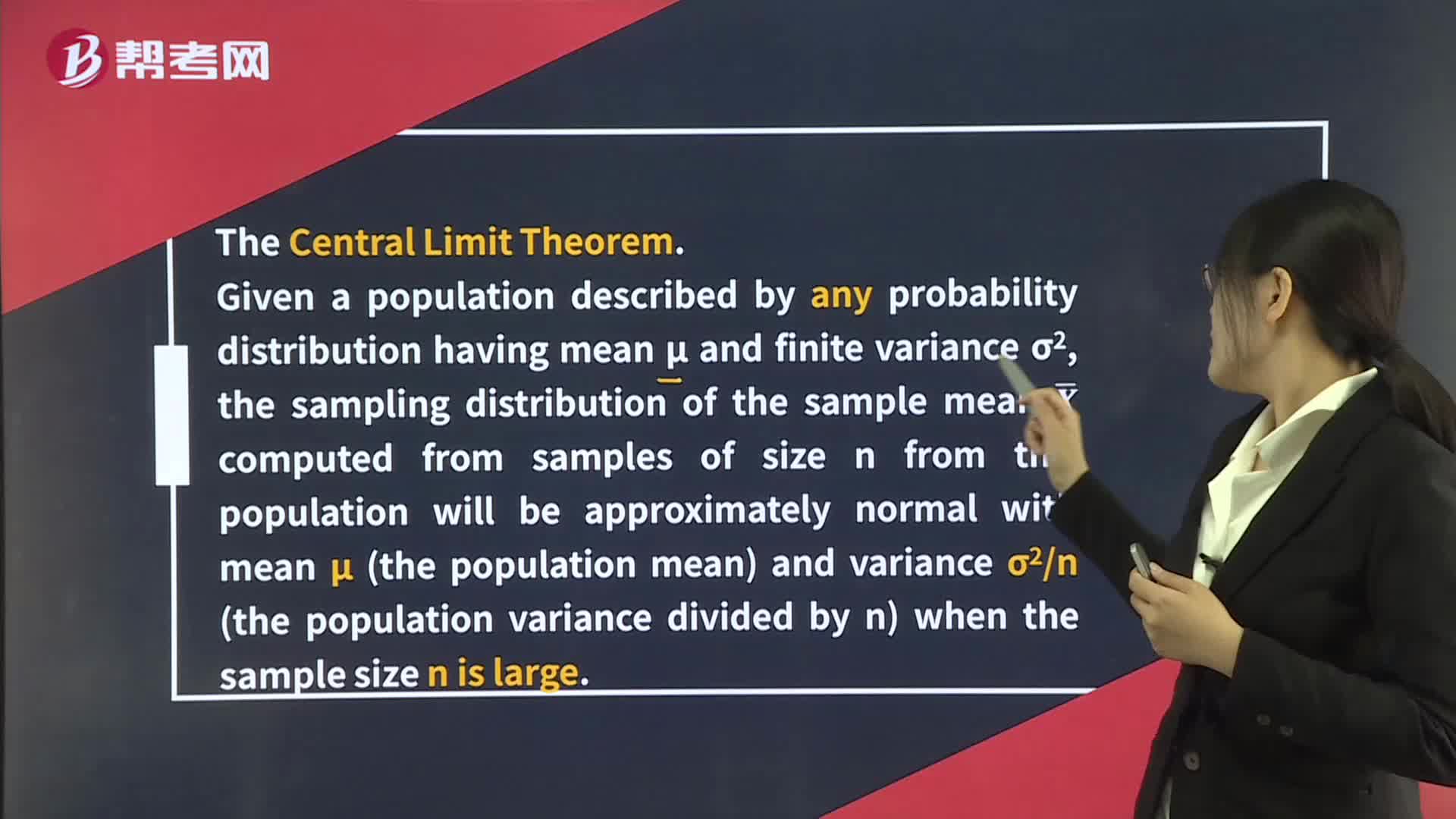
191Distribution of the Sample Mean:[Practicewhen the sample size is large.
 680
680Confidence Intervals for the Population Mean:error,A confidence:Unknown.normal.Population Variance Unknown—t-Distribution.of freedom for tα2 is n ? 1
 271
271Point and Interval Estimates of the Population Mean:Mean,examples of estimation formulas or estimators.:distribution.:Efficiency.[PracticeC.

微信掃碼關(guān)注公眾號(hào)
獲取更多考試熱門(mén)資料