下載億題庫APP
聯(lián)系電話:400-660-1360
下載億題庫APP
聯(lián)系電話:400-660-1360

請謹慎保管和記憶你的密碼,以免泄露和丟失
請謹慎保管和記憶你的密碼,以免泄露和丟失
Elliott Wave Theory
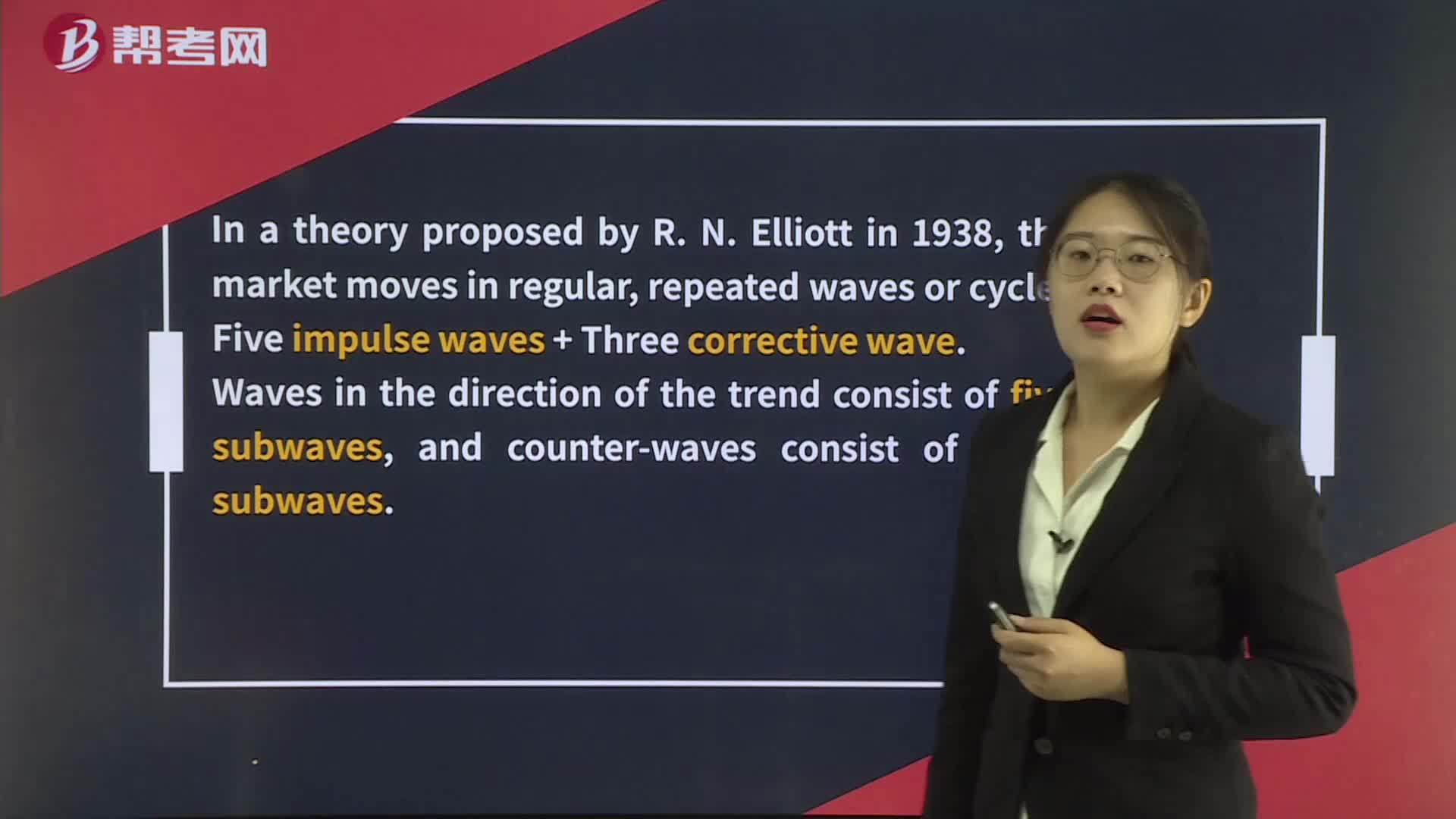
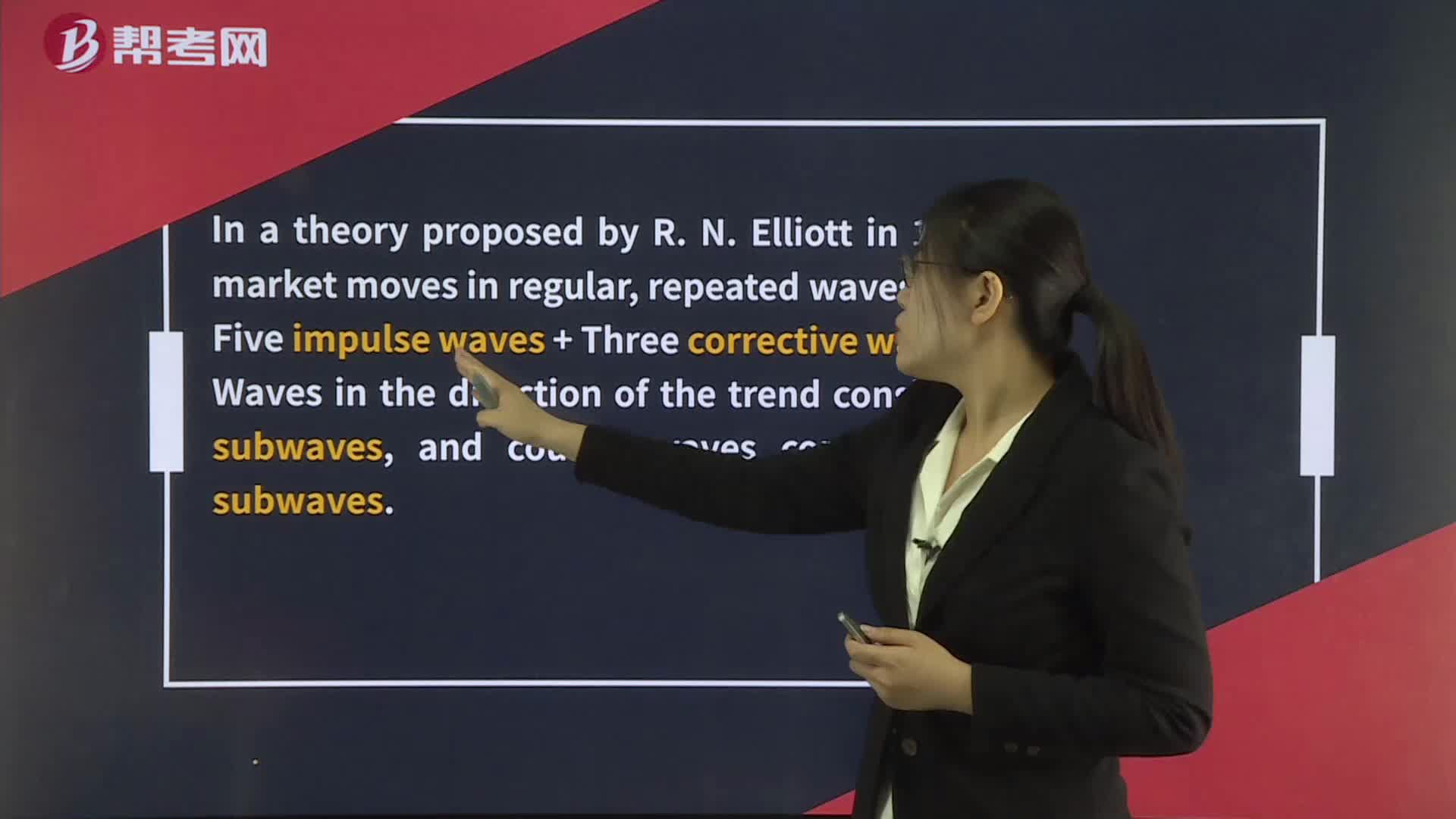
In a theory proposed by R. N. Elliott in 1938, the market moves in regular, repeated waves or cycles.
Five impulse waves + Three corrective wave.
Waves in the direction of the trend consist of five subwaves, and counter-waves consist of three subwaves.
微信截圖_159670901353320200806181702489.png)
The longest cycle can be broken down into subcycles. The major cycles are:
Grand supercycle Minor
Supercycle Minute
Cycle Minuette
Primary Subminuette
Intermediate
Elliott discovered that market waves follow patterns that are ratios of the numbers in the Fibonacci sequence.
0, 1, 1, 2, 3, 5, 8, 13, 21, 34 …
1/2 = 0.50, 2/3 = 0.6667, 3/5 = 0.6, 5/8 = 0.625, 8/13 = 0.6154…
2/1 = 2, 3/2 = 1.5, 5/3 = 1.6667, 8/5 = 1.600, 13/8 = 1.6250…
These ratios converge around 1.618.
[Practice Problems] In 1938, R. N. Elliott proposed a theory that equity markets move:
A. in stochastic waves.
B. in cycles following Fibonacci ratios.
C. in waves dependent on other securities.
[Solutions] B

微信掃碼關注公眾號
獲取更多考試熱門資料