下載億題庫(kù)APP
聯(lián)系電話:400-660-1360
下載億題庫(kù)APP
聯(lián)系電話:400-660-1360

請(qǐng)謹(jǐn)慎保管和記憶你的密碼,以免泄露和丟失
請(qǐng)謹(jǐn)慎保管和記憶你的密碼,以免泄露和丟失
Elliott Wave Theory
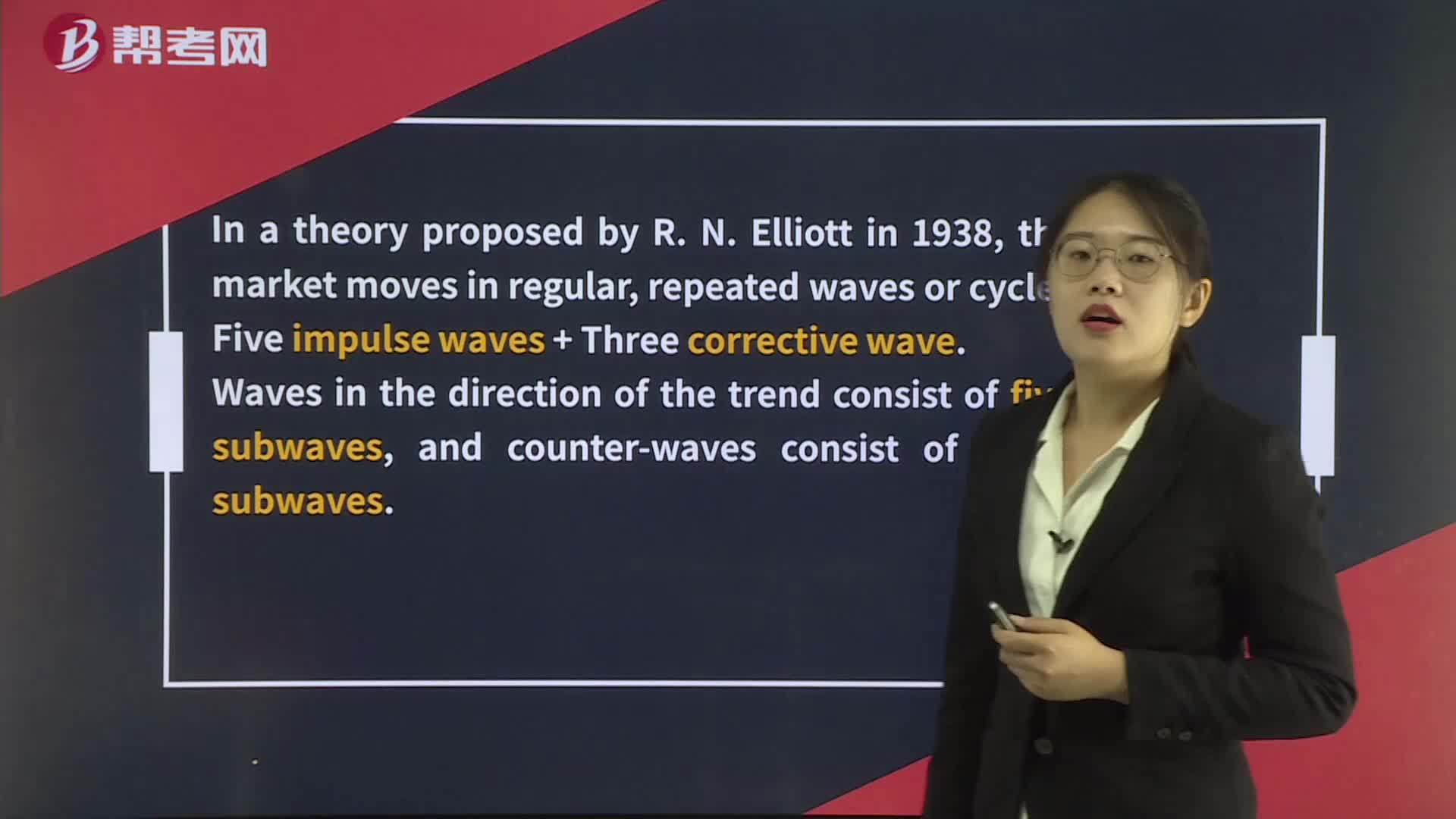
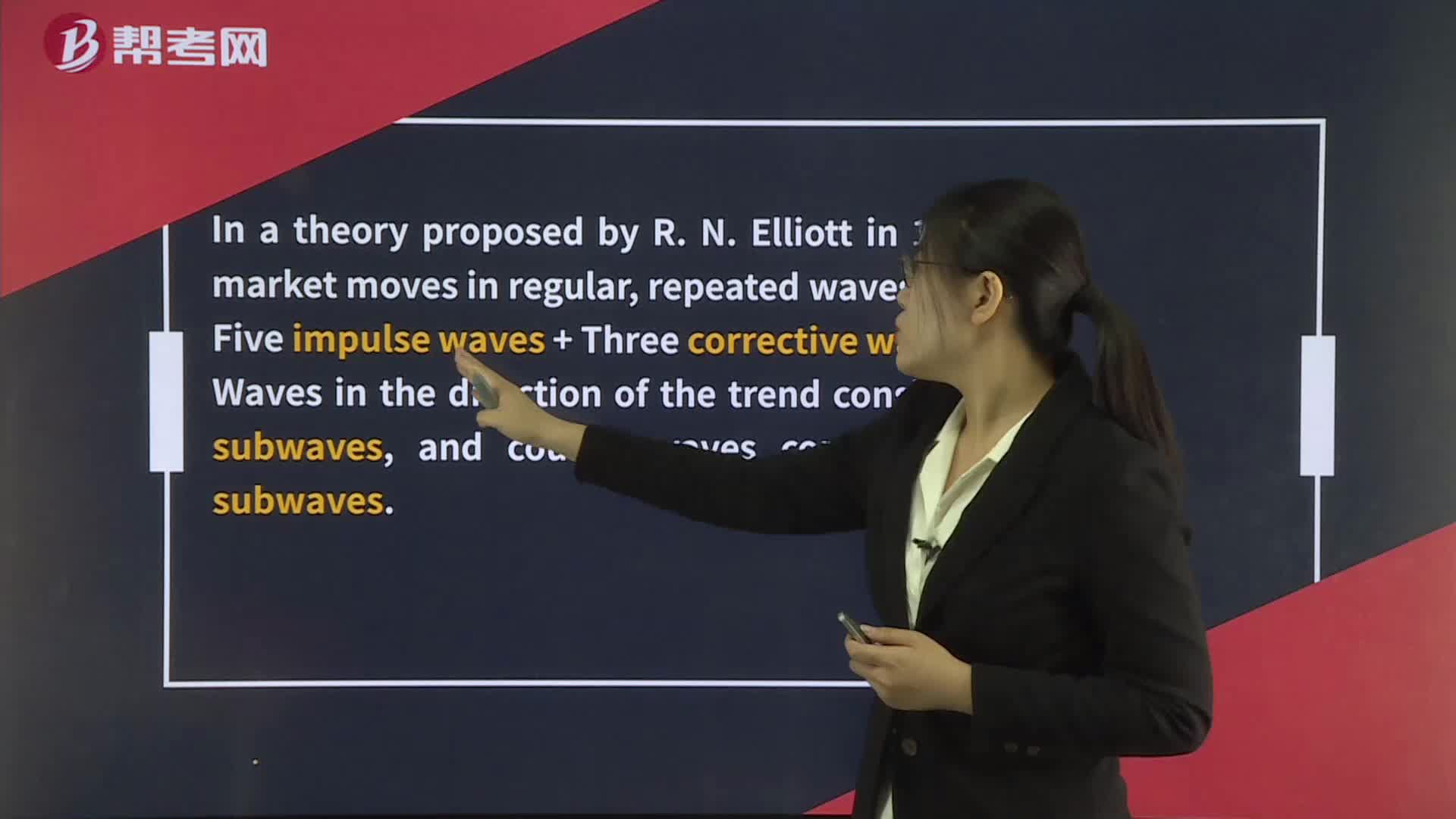
In a theory proposed by R. N. Elliott in 1938, the market moves in regular, repeated waves or cycles.
Five impulsewaves + Three corrective wave.
Waves in the direction of the trend consist of five subwaves, and counter-waves consist of three subwaves.
微信截圖_1596620144839320200805173610998.png)
微信截圖_1596620008130420200805173629603.png)
微信截圖_159662001598620200805173644231.png)
Elliott discovered that market waves follow patterns that are ratios of the numbers in the Fibonacci sequence.
0, 1, 1, 2, 3, 5, 8, 13, 21, 34 …
1/2 = 0.50, 2/3 = 0.6667, 3/5 = 0.6, 5/8 = 0.625, 8/13 = 0.6154…
2/1 = 2, 3/2 = 1.5, 5/3 = 1.6667, 8/5 = 1.600, 13/8 = 1.6250…
These ratios converge around 1.618.
[Practice Problems] In 1938, R. N. Elliott proposed a theory that equity markets move:
A. in stochastic waves.
B. in cycles following Fibonacci ratios.
C. in waves dependent on other securities.
[Solutions] B

微信掃碼關(guān)注公眾號(hào)
獲取更多考試熱門資料