Nonparametric Inference
幫考網(wǎng)校2020-08-07 11:22:54
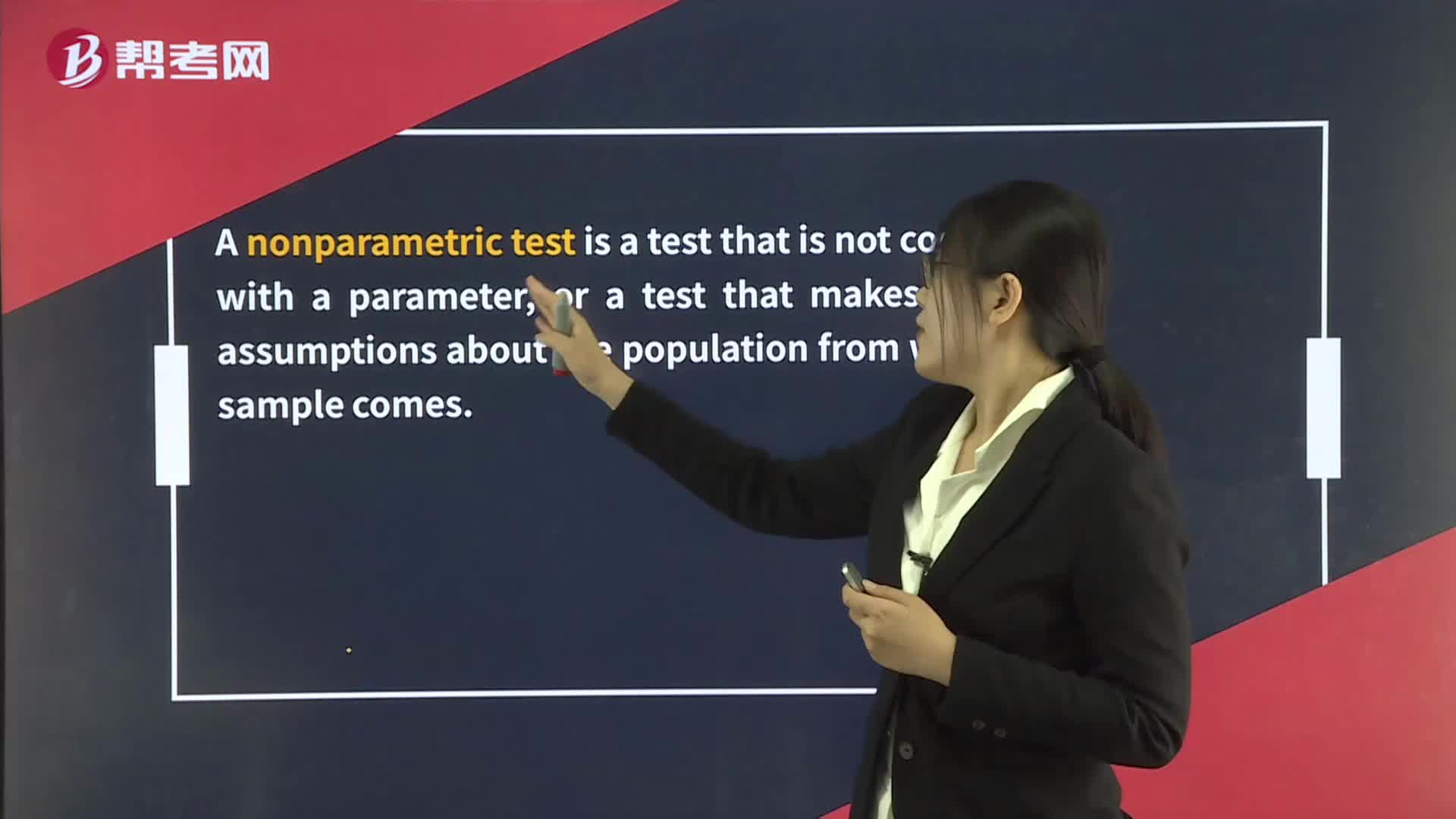
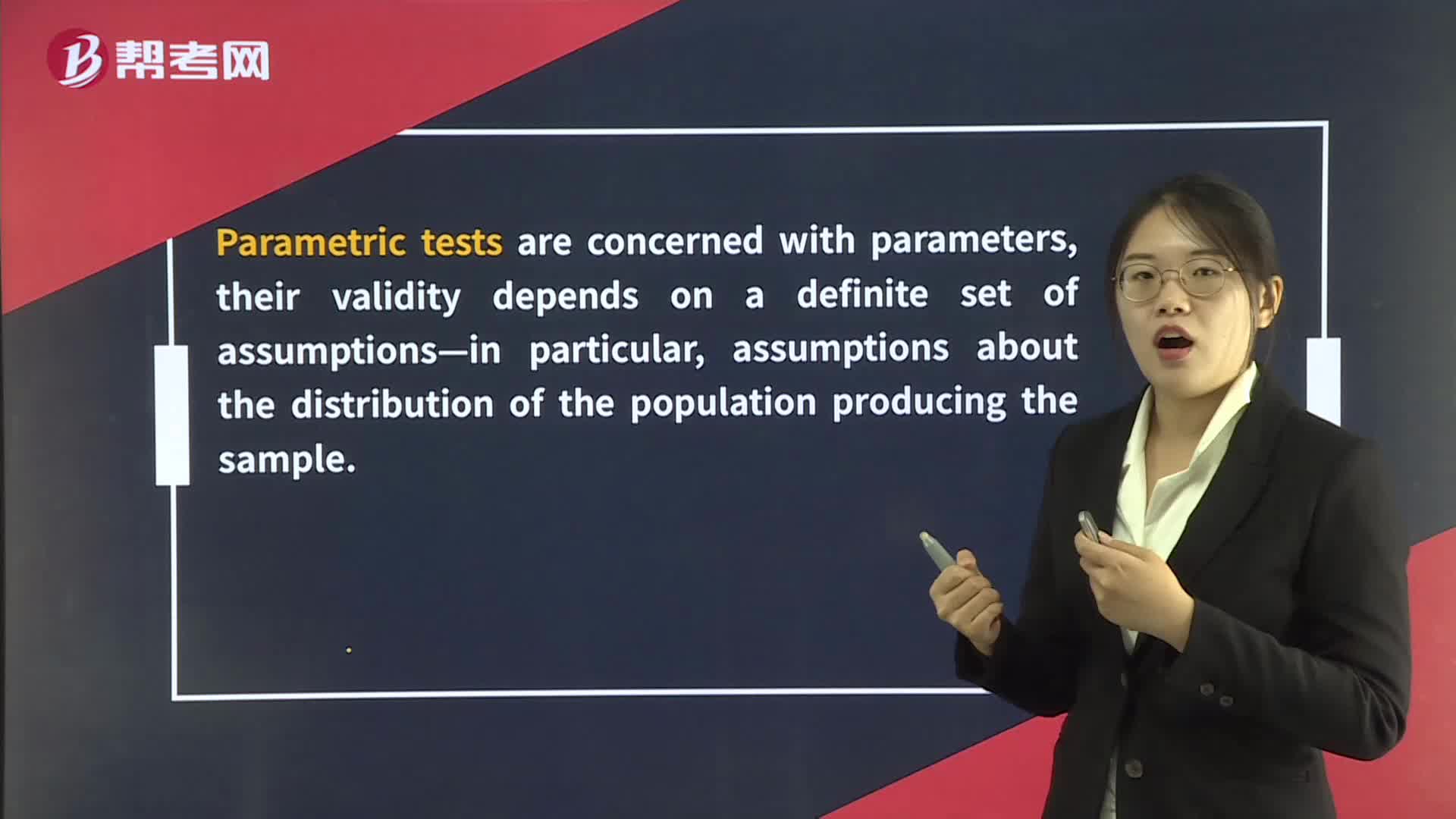
Nonparametric inference refers to statistical methods that do not require any assumptions about the underlying probability distribution of the data. Unlike parametric methods, which assume that the data follows a specific distribution (such as the normal distribution or the Poisson distribution), nonparametric methods allow for more flexibility in analyzing data that may not fit a particular distribution.
Nonparametric methods are often used when the data is not normally distributed or when the sample size is small. They can also be used when the data is ordinal or categorical rather than continuous.
Some common nonparametric methods include:
1. Wilcoxon rank-sum test: used to compare two independent samples.
2. Kruskal-Wallis test: used to compare more than two independent samples.
3. Mann-Whitney U test: used to compare two independent samples when the data is not normally distributed.
4. Spearman's rank correlation coefficient: used to measure the strength and direction of the association between two variables when the data is ordinal.
5. Kendall's tau correlation coefficient: used to measure the strength and direction of the association between two variables when the data is ordinal.
Nonparametric methods can provide valuable insights into data that may not fit a specific distribution or when assumptions about the data cannot be made. However, they may be less powerful than parametric methods when the data does follow a specific distribution.
 幫考網(wǎng)校