下載億題庫APP
聯(lián)系電話:400-660-1360
下載億題庫APP
聯(lián)系電話:400-660-1360

請謹(jǐn)慎保管和記憶你的密碼,以免泄露和丟失
請謹(jǐn)慎保管和記憶你的密碼,以免泄露和丟失
福有新托福和老托福之分,那么很多同學(xué)會問了,既然已經(jīng)實行新托福了,那么老托福里面的內(nèi)容還有必要做嗎?當(dāng)然是很有必要的,特別是聽力部分,它是糾正發(fā)音,培養(yǎng)語感也是很好的材料,下面幫考網(wǎng)分享了一些托福考試聽力部分的相關(guān)資料,希望可以幫到大家,一起來看看吧。
Current studies show that what goes on labels is an important consideration for manufacturers, since more than seventy percent of shoppers read food labels when considering whether to buy a product. A recent controversy as to whether labels on prepared foods should educate or merely inform the consumer is over, and a consumer group got its way. The group had maintained that product labels should do more than simply list how many grams of nutrients a food contains. Their contention was that labels should also list the percentage of a day\'s total nutrients that the product will supply to the consumer, because this information is essential in planning a healthy diet. A government agency disagreed strongly, favoring a label that merely informs the consumer, in other words, a label that only lists the contents of the products. The agency maintained that consumers could decide for themselves if the food is nutritious and is meeting their daily needs. The consumer group, in supporting its case, had cited a survey in which shoppers were shown a food label, and were then asked if they would need more or less of a certain nutrient after eating a serving of this product. The shoppers weren\'t able to answer the questions easily when they were not given a specific percentage. This study, and others helped get the new regulation passed, and now food products must have the more detailed labels.
【生詞摘錄】
1. label: n. [C]a piece of paper or other material that is stuck onto something and gives information about it
2. consideration: n. [U]formal careful thought and attention【正式】
3. manufacturer: n. [C]a company or industry that makes large quantities of goods
4. gram: n. [C]the basic unit for measuring weight in the metric system
5. nutrient: n. [C]a chemical or food that provides what is needed for plants or animals to live and grow 養(yǎng)分;營養(yǎng)物,營養(yǎng)品
6. contention: n. [U]formal argument and disagreement between people
7. favor: v. to think that a plan, idea etc is better than other plans, ideas etc
8. maintain: v. to strongly express your belief that something is true
9. nutritious: adj. food that is nutritious is full of the natural substances that your body needs to stay healthy or to grow properly(食物)有營養(yǎng)的,滋養(yǎng)的,營養(yǎng)價值高的
好了,以上就是今天分享的全部內(nèi)容了,各位小伙伴根據(jù)自己的情況進(jìn)行查閱吧,希望本文對各位有所幫助,預(yù)祝各位取得滿意的成績,如需了解更多相關(guān)內(nèi)容,請關(guān)注幫考網(wǎng)!
 32
32托福考試如何計分?:托福考試如何計分?托福考試的四個環(huán)節(jié),分?jǐn)?shù)由電腦自動生成和人工評分(經(jīng)過專業(yè)培訓(xùn)的權(quán)威人士)兩部分組成,確保分?jǐn)?shù)的公平及準(zhǔn)確性。只有托福考試采用這種多人評分機制,通過不記名方式,由多名接受過嚴(yán)格培訓(xùn)的考官予以評分,過程經(jīng)過質(zhì)量監(jiān)控,達(dá)到高標(biāo)準(zhǔn)的公平性與客觀性。
 29
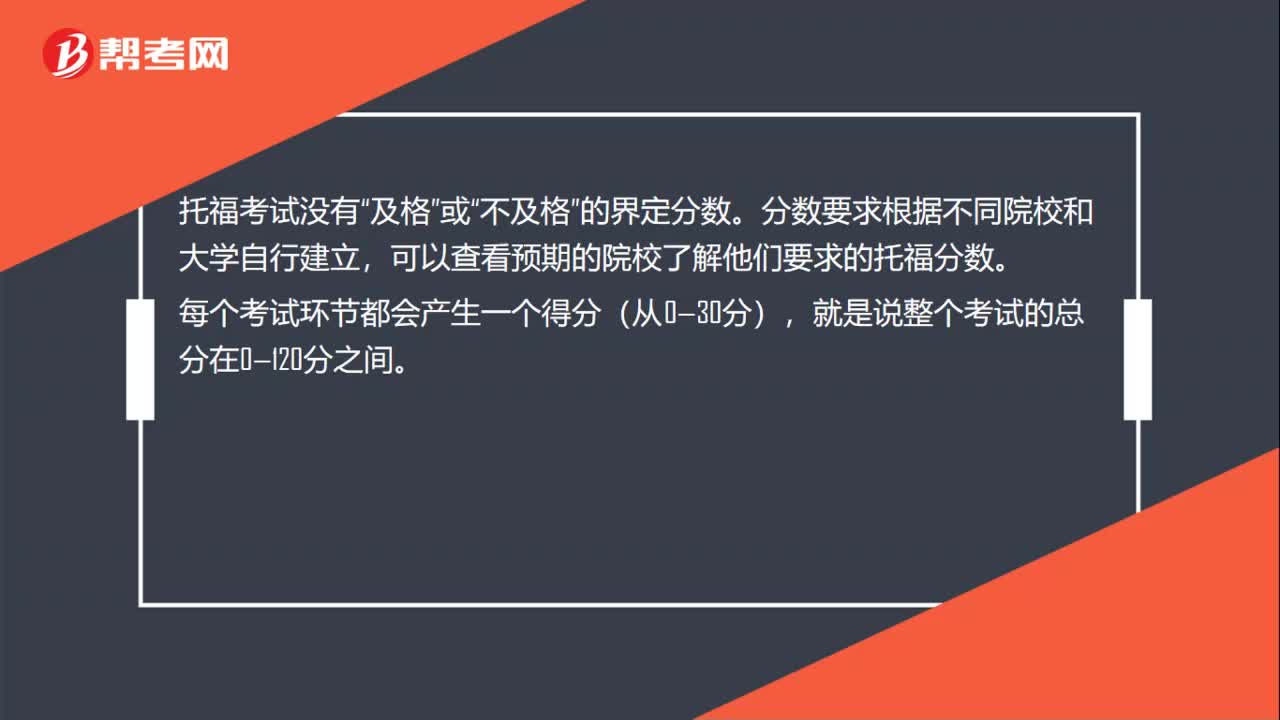
29托福考試的分?jǐn)?shù)要求是什么?:托福考試的分?jǐn)?shù)要求是什么?托福考試沒有“及格”或“不及格”的界定分?jǐn)?shù)。分?jǐn)?shù)要求根據(jù)不同院校和大學(xué)自行建立,可以查看預(yù)期的院校了解他們要求的托福分?jǐn)?shù)。每個考試環(huán)節(jié)都會產(chǎn)生一個得分(從0—30分),就是說整個考試的總分在0—120分之間。
 16
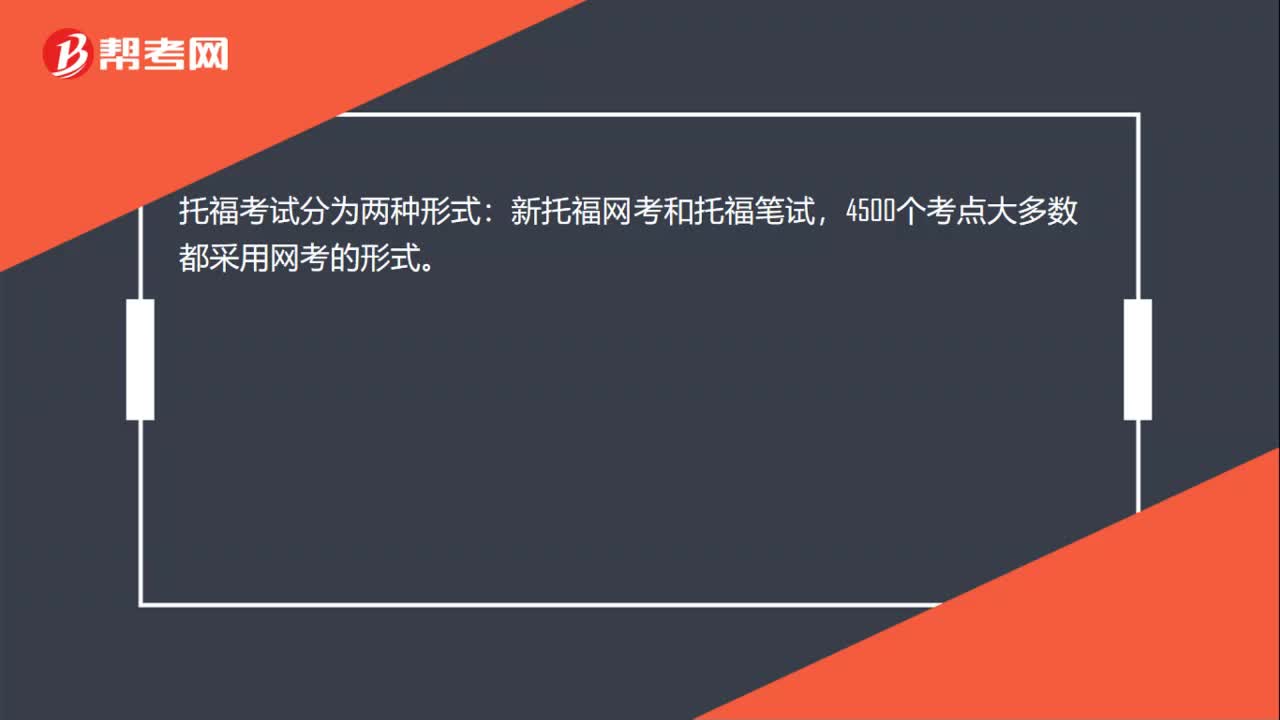
16托福的考試形式是什么?:托福的考試形式是什么?托福考試分為兩種形式:新托福網(wǎng)考和托福筆試,4500個考點大多數(shù)都采用網(wǎng)考的形式。