當(dāng)前位置: 首頁四六級考試閱讀理解章節(jié)練習(xí)正文

下載億題庫APP
聯(lián)系電話:400-660-1360
下載億題庫APP
聯(lián)系電話:400-660-1360

請謹慎保管和記憶你的密碼,以免泄露和丟失
請謹慎保管和記憶你的密碼,以免泄露和丟失

為了幫助大家更好的備戰(zhàn)2020年英語四級考試,幫考網(wǎng)在這里給大家?guī)砹舜髮W(xué)英語四級考試的閱讀練習(xí)題,供大家練習(xí)。希望能夠?qū)Υ蠹矣兴鶐椭?/span>
Although many of us may feel air-conditioners bring relief from hot, humid or polluted outside air, they pose many potential health hazards. Much research has looked at how the movement of air inside a closed environment---such as an office building---can spread disease or expose people in the building to harmful chemicals.
One of the more widely publicized dangers is that of Legionnaire’s disease, which was first recognized inthe 1970s. This was found to have affected people in buildings with air-conditioning systems in which warmair pumped out of the system’ cooling towers was somehow sucked back into the air intake (通風(fēng)口),in mostcases due to poor design. The warm air, filled with bacteria,was combined with cooled, conditioned air andwas then circulated around various parts of the building. Studies showed that even people outside such buildings were at risk if they walked past air exhaust pipes.
Large air-conditioning systems add water to the air they circulate by means of humidifiers (濕度調(diào)節(jié)器).Inolder systems, the water used for this process is kept in special reservoirs, the bottoms of which providebreeding grounds for bacteria which can find their way into the ventilation (通風(fēng))system. The risk to human health from this situation has been highlighted by the fact that the immune systems (免疫系統(tǒng))of approximately half of workers in air-conditioned office buildings have developed the ability to fight off the organisms found at the bottom of system reservoirs. But chemicals called “biocides”are added to reservoirs to make them germ-free, and they are dangerous in their own right in sufficient quantities, as they often contain compounds strongly linked to cancers.
Finally, it should be pointed out that the artificial climatic environment created by air-conditioners canalso affect us. In a natural environment, whether indoor or outdoor, there are small variations in temperature and humidity. Indeed, the human body has long been accustomed to these normal changes. In an air-conditioned living or working environment, however, body temperatures remain well under37℃, our normal temperature. This leads to a weakened immune system and thus greater exposure to diseases such as colds and flu.
練習(xí)題:
Choose correct answers to the question:
1.What do we know about Legionnaire\'s disease from the passage?
A.It was the most widely concerned office hazard.
B.It can affect people both inside and outside the building.
C.It happens only in air-conditioned office buildings.
D.It does not develop in well-designed buildings.
2.In the old air-conditioned systems, bacteria first develop______.
A.in the reservoirs
B. in the ventilation system
c. in the humidifiers
D. in the air intake
3.The fact that about half of workers developed the ability to fight off the bacteria may__.
A.relieve people’s worry about the danger caused by the bacteria
B.help people find an effective way to get rid of the bacteria
C.reflect the serious danger brought by the bacteria
D.cause serious disease such as cancers to people
4.The author most probably wants the readers to treat biocides with an attitude of_.
A.caution
B.trust
C.enthusiasm
D.criticism
5.The last paragraph implies that our immune system can be weakened when _?
A.we live in an artificial climatic environment
B.there are variations in temperature and humidity
C.our body temperatures often remain not high enough
D.we are often exposed to diseases such as colds and flu
1.[B] 事實細節(jié)題。本題主要考査復(fù)合句的理解。第2段最后一句表明B是正確選項。選項A中的most和C中的only都太絕對了,文中并未對選項A和C中的相關(guān)說法加以這樣的限定。選項D也太絕對了,第2段第3句只是說到“大多數(shù)情況下是因為空調(diào)設(shè)計欠佳所致”,并不是說所有設(shè)計良好的大廈就不會發(fā)生這種情況。
2.[A] 事實細節(jié)題。本題考查復(fù)合句的理解。只要明白第3段第2句這個非限制性定語從句中的the bottoms of which中的which是指上文的reservoirs,問題就不難解決了。
3.[C] 事實細節(jié)題。本題考查被動語態(tài)長句的理解。在第3段第3句中,關(guān)鍵詞是highlight,選項C是對原句主謂部分的近義替換。選項A和B在文中皆無提及,選項D是過度使用生物殺滅劑的后果,與本題干的情況無關(guān)。
4.[A] 觀點態(tài)度題。第3段最后兩句討論生物殺滅劑的用處,其中最后一句中的but, dangerous和cancers等詞說明作者認為要慎用這種殺滅劑。作者并沒對殺滅劑全盤否定,只是說過量使用會引發(fā)危險,因此選項D不對。
5.[C] 推理判斷題。本題考查代詞的理解。解題的關(guān)鍵在于理解最后一句中的This是指上一句所說的情況。選項A中所說的人造環(huán)境不是使免疫系統(tǒng)變?nèi)醯谋厝粭l件。選項B是保持免疫系統(tǒng)健康的條件。選項D是免疫系統(tǒng)變?nèi)鹾蟮挠绊憽?/span>
以上就是本次幫考網(wǎng)和大家分享的全部內(nèi)容了,希望小伙伴們能夠繼續(xù)努力,相信最后一定會取得好成績的。關(guān)注幫考網(wǎng),還有更多有關(guān)英語四級考試的練習(xí)等著你哦!
 96
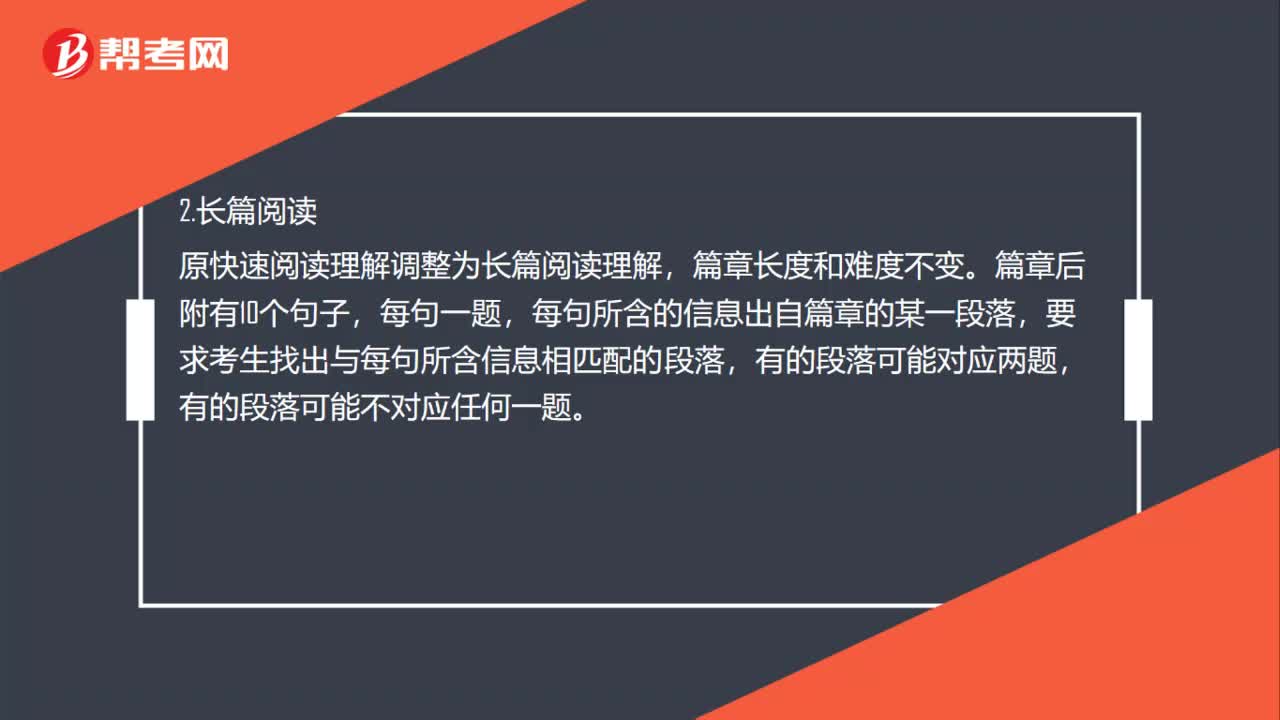
96英語四六級的新題型是哪些?:英語四六級的新題型是哪些?1.單詞及詞組聽寫,原復(fù)合式聽寫調(diào)整為單詞及詞組聽寫。短文長度及難度不變,要求考生在聽懂短文的基礎(chǔ)上,用所聽到的原文填寫空缺的單詞或詞組,短文播放三遍,原快速閱讀理解調(diào)整為長篇閱讀理解,篇章長度和難度不變,篇章后附有10個句子,每句一題,每句所含的信息出自篇章的某一段落,要求考生找出與每句所含信息相匹配的段落。有的段落可能不對應(yīng)任何一題。原單句漢譯英調(diào)整為段落漢譯英。
 27
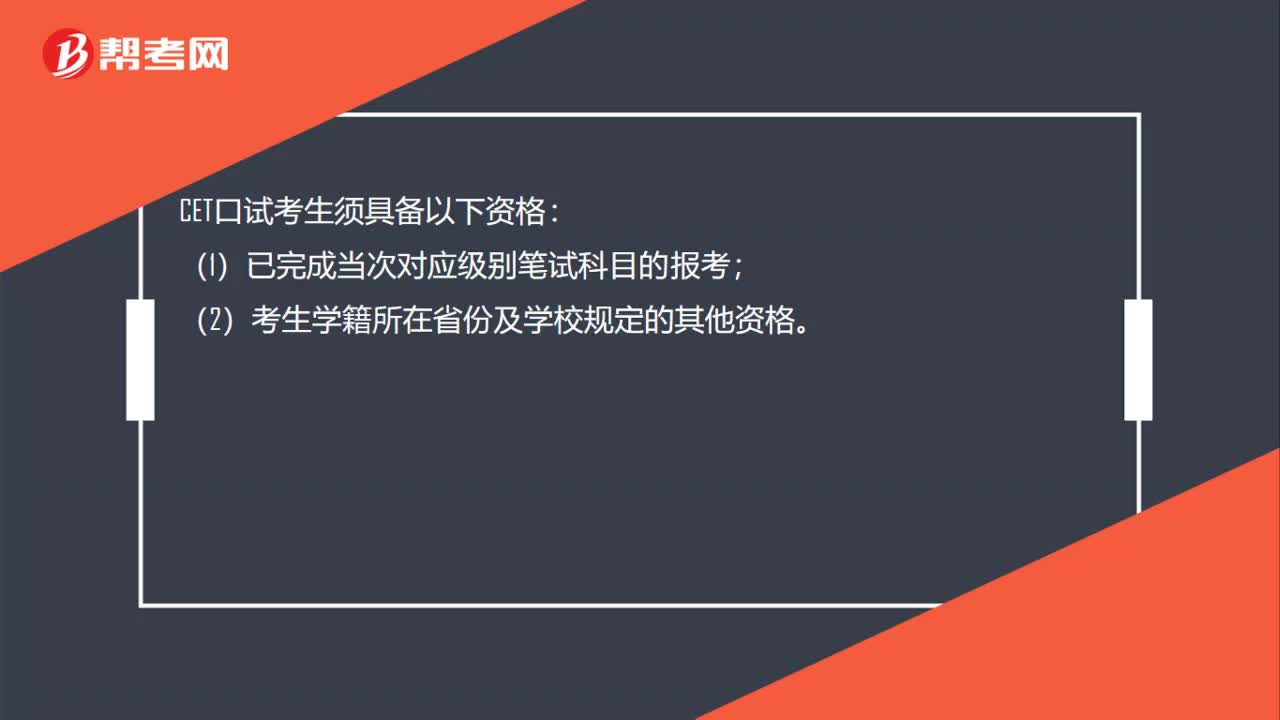
27英語四六級的口試報考資格是什么?:英語四六級的口試報考資格是什么?CET口試考生須具備以下資格:(1)已完成當(dāng)次對應(yīng)級別筆試科目的報考;(2)考生學(xué)籍所在省份及學(xué)校規(guī)定的其他資格。
 34
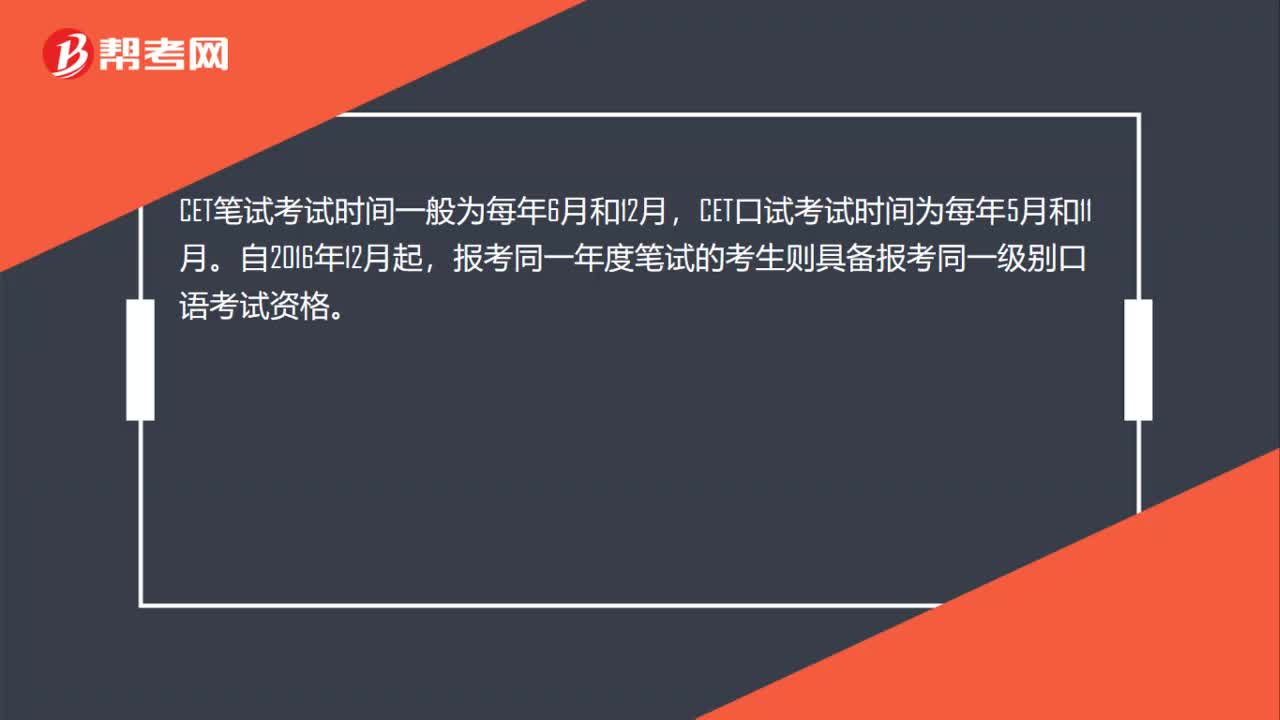
34英語四六級的考試時間是什么時候?:英語四六級的考試時間是什么時候?CET筆試考試時間一般為每年6月和12月,CET口試考試時間為每年5月和11月。自2016年12月起,報考同一年度筆試的考生則具備報考同一級別口語考試資格。
 00:47
00:472020-06-01
 01:51
01:512020-06-01
 00:25
00:252020-06-01
01:362020-06-01
00:272020-06-01

微信掃碼關(guān)注公眾號
獲取更多考試熱門資料