
下載億題庫(kù)APP
聯(lián)系電話:400-660-1360
下載億題庫(kù)APP
聯(lián)系電話:400-660-1360

請(qǐng)謹(jǐn)慎保管和記憶你的密碼,以免泄露和丟失
請(qǐng)謹(jǐn)慎保管和記憶你的密碼,以免泄露和丟失

關(guān)于2020年的MPA考試,幫考網(wǎng)為大家準(zhǔn)備了在職MPA聯(lián)考英語(yǔ)閱讀專項(xiàng)練習(xí)及答案,下面一起來(lái)看看吧!幫考網(wǎng)會(huì)一步一步陪你備考,每一次練習(xí)的成功,都會(huì)淋漓盡致的反映在分?jǐn)?shù)上。一起加油前行。
Imagine a world in which there was suddenly no emotion.a world in which human beings could feel no love or happiness, no terror or hate. Try to imagine the consequences of such a transformation. People might not be able to stay alive: knowing neither joy nor pleasure, anxiety nor fear, they would be as likely to repeat acts that hurt them as acts that were beneficial. They could not learn: they could not benefit from experience because this emotionless world would lack rewards and punishments. Society would soon disappear: people would be as likely to harm one another as to provide help and support. Human relationships would not exist: in a world without friends or enemies, there could be no marriage, affection among companions, or bonds among members of groups. Society\'s economic underpinnings (支柱) would be destroyed: since earning $10 million would be no more pleasant than earning $10, there would be no incentive to work. In fact, there would be no incentives of any kind. For as we will see, incentives imply a capacity to enjoy them.
In such a world, the chances that the human species would survive are next to zero, because emotions are the basic instrument of our survival and adaptation. Emotions structure the world for us in important ways. As individuals, we categorize objects on the basis of our emotions. True, we consider the length, shape, size, or texture, but an object\'s physical aspects are less important than what it has done or can do to us—hurt us, surprise us, anger us or make us joyful. We also use categorizations colored by emotions in our families, communities, and overall society. Out of our emotional experiences with objects and events comes a social feeling of agreement that certain things and actions are "good" and others are "bad", and we apply these categories to every aspect of our social life—from what foods we eat and what clothes we wear to how we keep promises and which people our group will accept. In fact, society exploits our emotional reactions and attitudes, such as loyalty, morality, pride, shame, guilt, fear and greed, in order to maintain itself. It gives high rewards to individuals who perform important tasks such as surgery, makes he roes out of individuals for unusual or dangerous achievements such as flying fighter planes in a war, and uses the legal and penal (刑法的) system to make people afraid to engage in antisocial acts.
1.The reason why people might not be able to stay alive in a world without emotion is that____.
A.they would not be able to tell the texture of objects
B.they would not know what was beneficial anti what was harmful to them
C.they would not be happy with a life without love
D.they would do things that hurt each other\'s feelings
2.According to the passage, people\'s learning activities are. possible because they____.
A.believe that emotions are fundamental for them to stay alive
B.benefit from providing help and support to one another
C.enjoy being rewarded for doing the right thing
D.know what is vital to the progress of society
3.It can be inferred from the passage that the economic foundation of society is dependent on____.
A.the ability to make money
B.the will to work for pleasure
C.the capacity to enjoy incentives
D.the categorizations of our emotional experiences
4.Emotions are significant for man\'s survival and adaptation because____.
A.they provide the means by which people view the size or shape of objects
B.they are the basis for the social feeling of agreement by which society is maintained
C.they encourage people to perform dangerous achievements
D.they generate more love than hate among people
5.The emotional aspects of an object are more important than its physical aspects in that they____.
A.help society exploit its members for profit
B.encourage us to perform important tasks
C.help to perfect the legal and penal system
D.help us adapt our behavior to the world surrounding us
參考答案:B C C B D
以上就是本次幫考網(wǎng)和大家分享的全部?jī)?nèi)容了,希望小伙伴們能夠繼續(xù)努力,相信最后一定會(huì)取得好成績(jī)的。關(guān)注幫考網(wǎng),還有更多有關(guān)考試練習(xí)在等著你哦!
 25
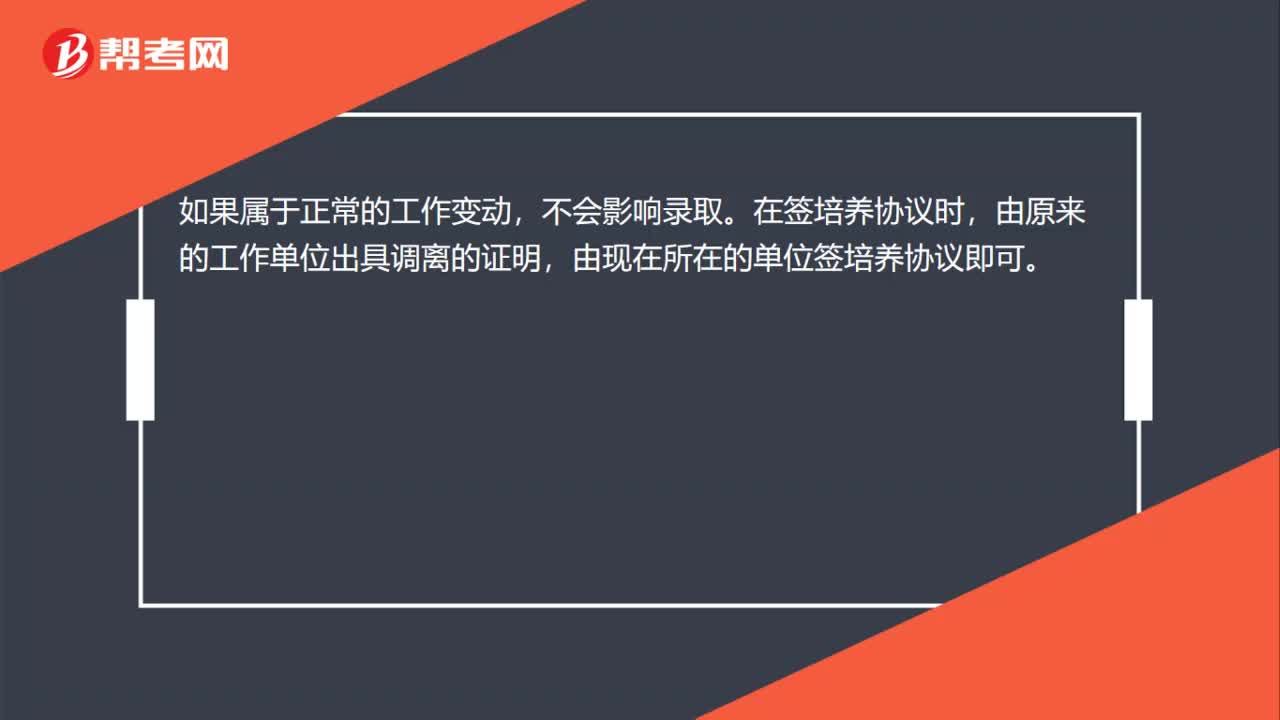
25MPA錄取后是否可更改學(xué)習(xí)方式?:MPA錄取后是否可更改學(xué)習(xí)方式?錄取后或入學(xué)后可以更改學(xué)習(xí)方式。錄取后在每年的五月份簽訂培養(yǎng)協(xié)議書時(shí)可以更改學(xué)習(xí)方式(全日制學(xué)習(xí)或在職學(xué)習(xí));入學(xué)后如有特殊情況需要變更學(xué)習(xí)方式,可提交申請(qǐng),經(jīng)批準(zhǔn)后變更學(xué)習(xí)方式。
 28
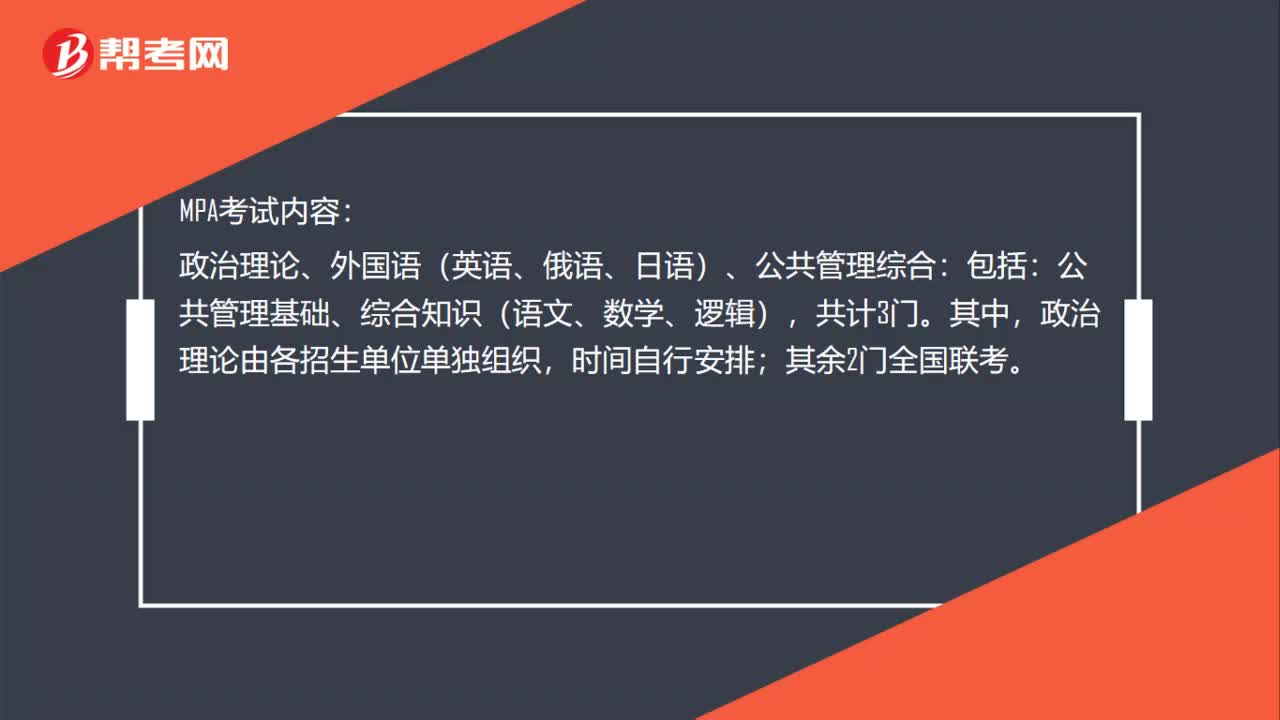
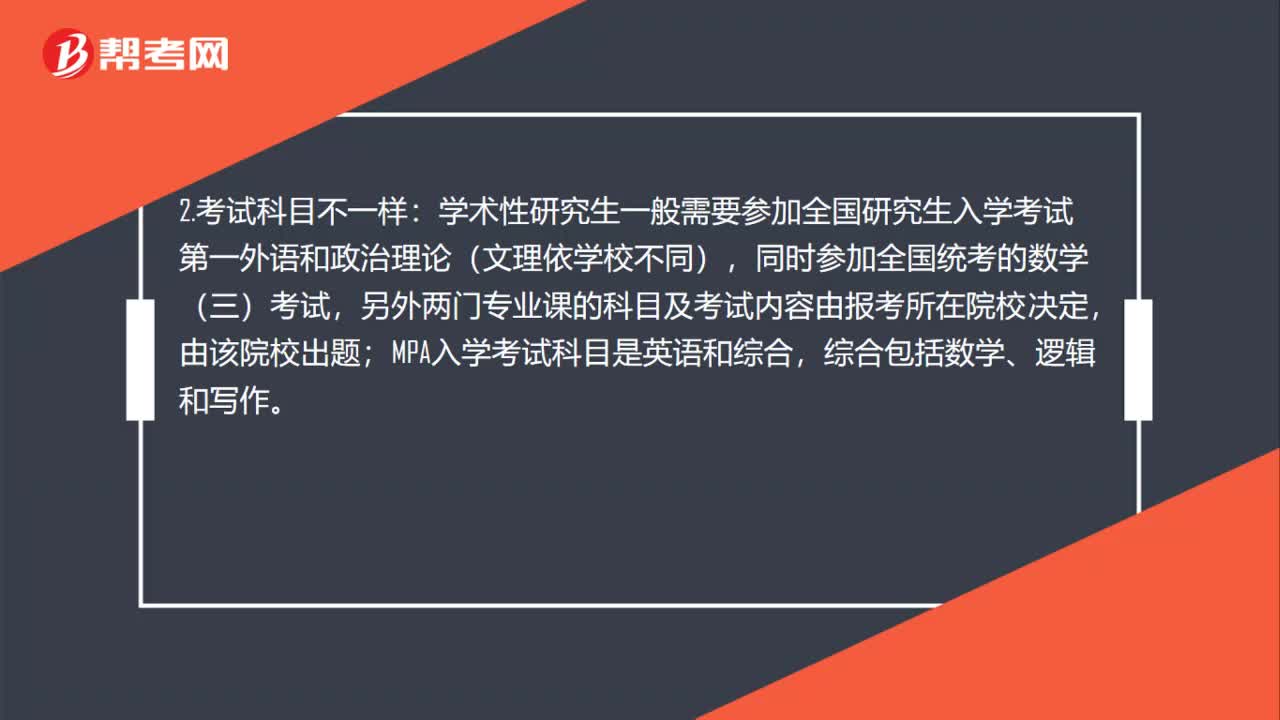
28MPA聯(lián)考考試科目有哪些?:MPA聯(lián)考考試科目有哪些?MPA考試內(nèi)容:政治理論、外國(guó)語(yǔ)(英語(yǔ)、俄語(yǔ)、日語(yǔ))、公共管理綜合:包括:公共管理基礎(chǔ)、綜合知識(shí)(語(yǔ)文、數(shù)學(xué)、邏輯),共計(jì)3門。其中,政治理論由各招生單位單獨(dú)組織,時(shí)間自行安排;其余2門全國(guó)聯(lián)考。
 63
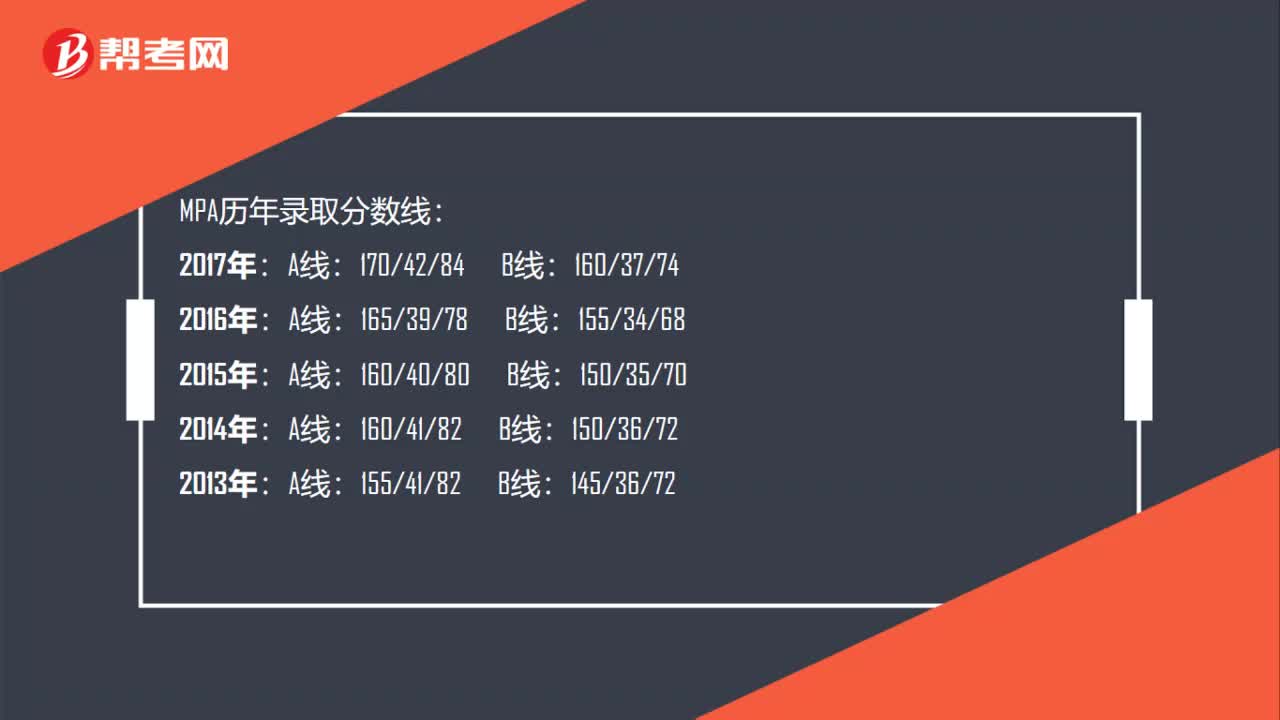
63MPA歷年錄取分?jǐn)?shù)線是多少?:MPA歷年錄取分?jǐn)?shù)線:1453672
 00:21
00:212020-06-12
 01:07
01:072020-06-12
 01:33
01:332020-06-12
 00:54
00:542020-06-12
 01:23
01:232020-06-12

微信掃碼關(guān)注公眾號(hào)
獲取更多考試熱門資料