當(dāng)前位置: 首頁ACCA考試公司法與商法(基礎(chǔ)階段)章節(jié)練習(xí)正文
下載億題庫APP
聯(lián)系電話:400-660-1360
下載億題庫APP
聯(lián)系電話:400-660-1360

請(qǐng)謹(jǐn)慎保管和記憶你的密碼,以免泄露和丟失
請(qǐng)謹(jǐn)慎保管和記憶你的密碼,以免泄露和丟失

報(bào)考2020年ACCA考試的小伙伴們,大家都有在認(rèn)真?zhèn)淇紗幔繛榱藥椭蠹腋玫膫淇迹旅鎺涂季W(wǎng)就給大家分享一個(gè)ACCA考試《公司法與商法》的試題,備考的小伙伴趕緊來練練吧。
Question:
In relation to the law of contract,explain the rules relating to:
(a)acceptance of an offer;
(b)revocation of an offer.
Answer:
This question requires an explanation of the rules relating to the acceptance and revocation of offers in contract law.
(a)Acceptance is necessary for the formation of a contract. Once the offeree has accepted the terms offered, a contract comes into effect. Both parties are bound: the offeror can no longer withdraw their offer, nor can the offeree withdraw their acceptance. The rules relating to acceptance are:
(i)Acceptance must correspond with the terms of the offer. Thus, the offeree must not seek to introduce new contractual terms into their acceptance (Neale v Merrett (1930)).
(ii)A counter-offer does not constitute acceptance (Hyde v Wrench (1840)). Analogously, a conditional acceptance cannot create a contractual relationship (Winn v Bull (1877)).
(iii)Acceptance may be in the form of express words, either oral or written. Alternatively, acceptance may be implied from conduct (Brogden v Metropolitan Railway Co (1877)).
(iv)Generally, acceptance must be communicated to the offeror. Consequently, silence cannot amount to acceptance (Felthouse v Bindley (1863)).
(v)Communication of acceptance is not necessary, however, where the offeror has waived the right to receivecommunication. Thus in unilateral contracts, such as Carlill v Carbolic Smoke Ball Co (1893), acceptance occurredwhen the offeree performed the required act. Thus, in the Carlill case, Mrs Carlill did not have to inform the Smoke Ball Co that she had used their treatment.
(vi)Where acceptance is communicated through the postal service, then it is complete as soon as the letter, properly addressed and stamped, is posted. The contract is concluded even if the letter subsequently fails to reach the offeror(Adams v Lindsell (1818)). However, the postal rule will only apply where it is in the contemplation of the parties that the post will be used as the means of acceptance. If the parties have negotiated either face to face, in a shop, for example, or over the telephone, then it might not be reasonable for the offeree to use the post as a means ofcommunicating their acceptance and they would not gain the benefit of the postal rule.
The postal rule applies equally to telegrams (Byrne v Van Tienhoven (1880)). It does not apply, however, when means of instantaneous communication are used (Entores v Miles Far East Corp (1955)).
In order to expressly exclude the operation of the postal rule, the offeror can insist that acceptance is only to be effective on receipt (Holwell Securities v Hughes(1974)). The offeror can also require that acceptance be communicated in a particular manner. Where the offeror does not insist that acceptance can only be made in the stated manner, then acceptance is effective if it is communicated in a way no less advantageous to the offeror (Yates Building Co v J Pulleyn& Sons (1975)).
(b)Revocation is the technical term for the cancellation of an offer and occurs when the offeror withdraws their offer. The rules relating to revocation are:
(i)An offer may be revoked at any time before acceptance. However, once revocation has occurred, it is no longer open to the offeree to accept the original offer (Routledge v Grant (1828)).
(ii)Revocation is not effective until it is actually received by the offeree. This means that the offeror must make sure that the offeree is made aware of the withdrawal of the offer, otherwise it might still be open to the offeree to accept the offer(Byrne v Tienhoven (1880)).
(iii)Communication of revocation may be made through a reliable third party. Where the offeree finds out about thewithdrawal of the offer from a reliable third party, the revocation is effective and the offeree can no longer seek to accept the original offer (Dickinson v Dodds (1876)).
(iv)A promise to keep an offer open is only binding where there is a separate contract to that effect. Such an agreement is known as an option contract, and it must be supported by separate consideration for the promise to keep the offer open.
(v)In relation to unilateral contracts, i.e. a contract where one party promises something in return for some action on the part of another party, revocation is not permissible once the offeree has started performing the task requested (Errington v Errington & Woods (1952)).
以上是本次幫考網(wǎng)分享給大家的ACCA考試試題,備考的小伙伴抓緊時(shí)間練習(xí)一下吧。欲了解更多關(guān)于ACCA考試的試題,敬請(qǐng)關(guān)注幫考網(wǎng)!
 80
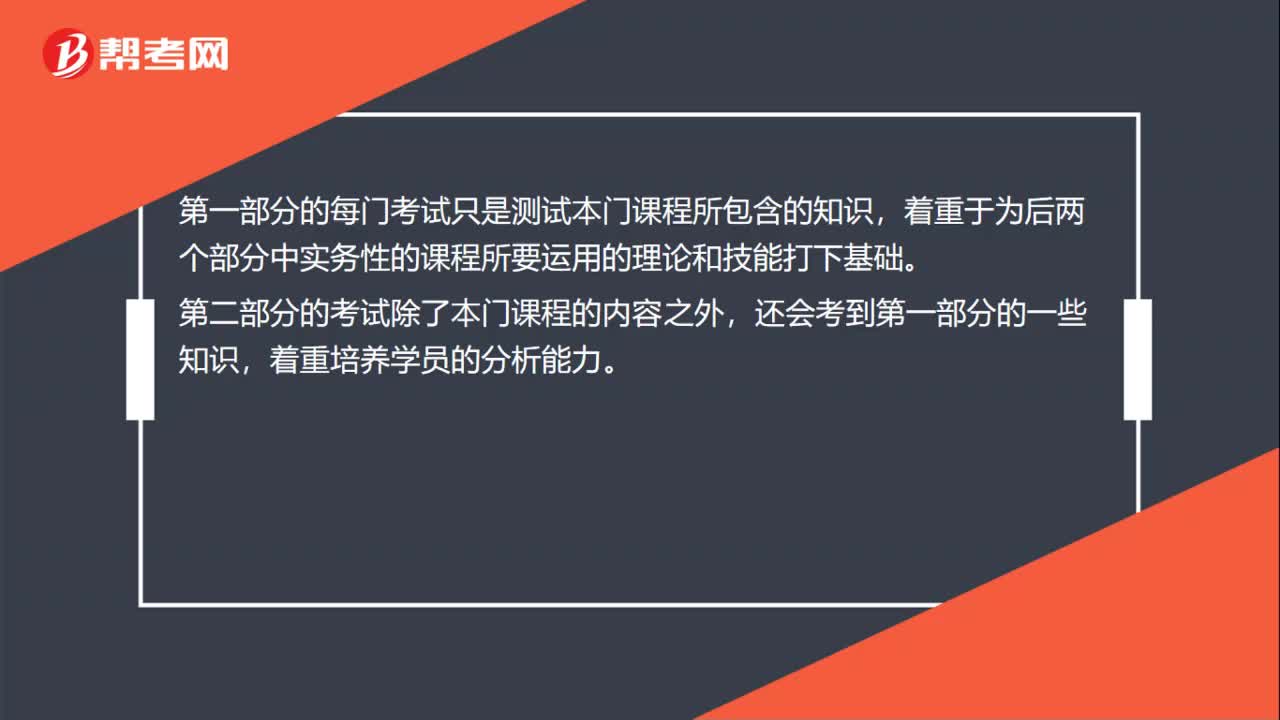
80ACCA考試難度大嗎?:ACCA考試難度大嗎?ACCA考試的難度是以英國大學(xué)學(xué)位考試的難度為標(biāo)準(zhǔn),第一(f1-f3)、第二部分(f4-f9)的難度分別相當(dāng)于學(xué)士學(xué)位高年級(jí)課程的考試難度,第三部分p階段的考試相當(dāng)于碩士學(xué)位最后階段的考試。第一部分的每門考試只是測(cè)試本門課程所包含的知識(shí),著重于為后兩個(gè)部分中實(shí)務(wù)性的課程所要運(yùn)用的理論和技能打下基礎(chǔ)。第二部分的考試除了本門課程的內(nèi)容之外。
 56
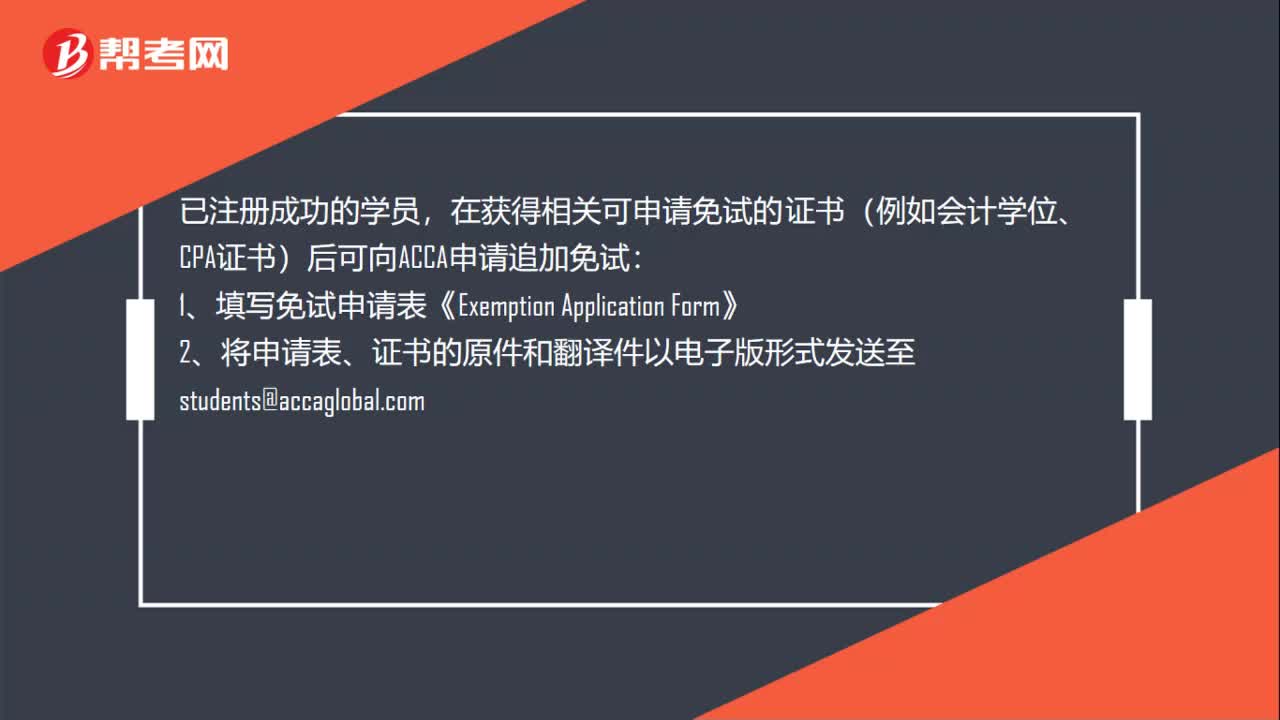
56ACCA考試怎么申請(qǐng)免考?:ACCA考試怎么申請(qǐng)免考?已注冊(cè)成功的學(xué)員,在獲得相關(guān)可申請(qǐng)免試的證書(例如會(huì)計(jì)學(xué)位、CPA證書)后可向ACCA申請(qǐng)追加免試:1、填寫免試申請(qǐng)表《Exemption。2、將申請(qǐng)表、證書的原件和翻譯件以電子版形式發(fā)送至students@accaglobal.com:3、請(qǐng)注意查收郵件或登錄MYACCA學(xué)員賬戶查看免試信息,4、確認(rèn)時(shí)間為5個(gè)月左右版;(例如,7月15日前提交申請(qǐng)12月考試生效
 66
66ACCA考試有成績(jī)單嗎?:ACCA考試有成績(jī)單嗎?ACCA官方是不會(huì)像四六級(jí)考試那樣在通過考試后發(fā)成績(jī)單的,但是在通過全部科目后,ACCA學(xué)員可以通過官方網(wǎng)站下載ACCA準(zhǔn)會(huì)員證書。然而各個(gè)科目雖然沒有單科成績(jī)單,但我們可以登錄官網(wǎng)進(jìn)行查看。登錄myacca賬戶查看成績(jī)單的主要方式如下:1、登陸ACCA官網(wǎng)accaglobal.com,進(jìn)入學(xué)員個(gè)人頁面;2、 輸入個(gè)人的學(xué)員注冊(cè)號(hào)碼及密碼后點(diǎn)擊按鈕“l(fā)ogin”
 01:03
01:032020-06-04
01:202020-06-04
 01:21
01:212020-06-04
 00:34
00:342020-06-04
 00:19
00:192020-06-04
微信掃碼關(guān)注公眾號(hào)
獲取更多考試熱門資料